Test: 4

Knox Magazine

Summer-Fall 2026

Features

Making a Great College Even Better

Highlights from President McGadney’s First Five Years at Knox

Compiled by Megan Scott ’96, Vice President for Communications and Heather Bumps, Chief of Staff and Vice President for Strategic Initiatives

At his inauguration in May 2022, Knox College’s 20th president, C. Andrew McGadney, pledged to dedicate his presidency to making a great institution even better and noted three ways the College can move forward: “acknowledge who we are, double down on our strengths, and dream big.” President McGadney and his leadership team immediately got to work to fulfill this pledge. Moving at an intentionally rapid pace, they spoke to as many members of the Knox and Galesburg communities as possible and launched a Strategic Planning Framework, approved by the Board of Trustees in October 2022, that built upon Knox’s strong foundation and outlined bold ideas and ambitious plans for Knox’s future. 
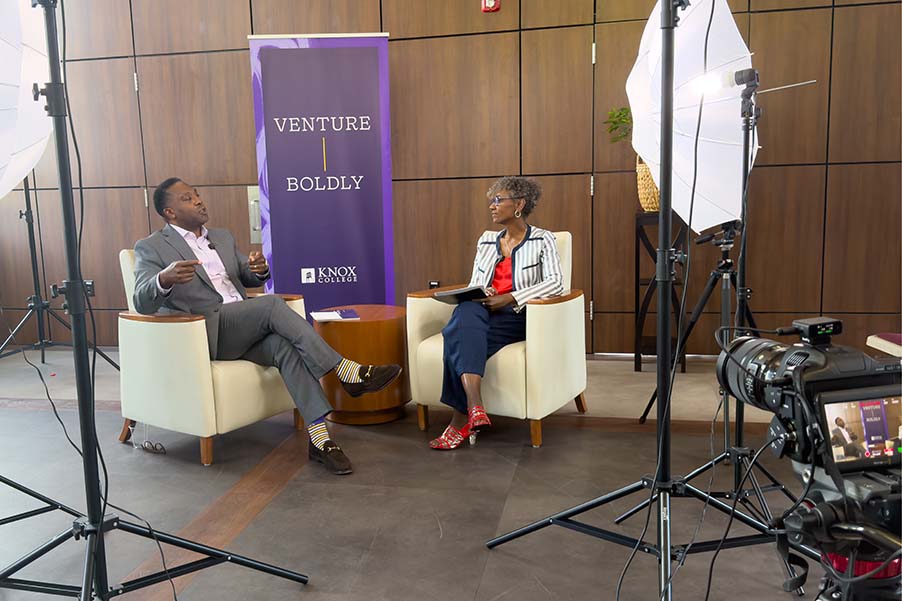
President McGadney and Dorothy Tucker sit in two white chairs facing each other, surrounded by cameras. There is a purple pull-up banner behind them that reads "Venture Boldly."
Photo by Steve Davis P’12

As President McGadney completed his first five years leading our historic prairie college, he sat down with Emmy award-winning Dorothy Tucker, CBS News Chicago Investigative Reporter and 2026 recipient of an Honorary Doctorate of Humane Letters, to discuss lessons learned, accomplishments to date, and hopes for the future of Knox. What follows are excerpts of their in-depth conversation, as well as highlights of President McGadney’s first years at Knox. 

I want to start with just setting the stage of five years ago. What was your mission then and how has it changed given the state of the country today?

Five years ago, as you will all remember, we were in the midst of COVID, and I would say that the higher education industry was still at a point where it was really dealing with some significant headwinds. The number of students coming out of high school and going into college was declining. Many small liberal arts colleges were struggling financially. We were seeing some schools closing and some schools merging in 2021, and you’re still seeing these things today. I think for Knox at that time, their prospectus for the new president was really about how do you create a financially sustainable institution. And it listed a series of things that Knox was looking for a new leader to do, and at the top of the list was to grow enrollment. I was really concerned about deferred maintenance, increasing fundraising, and, ultimately, how to stabilize the institution, and I coined the phrase “how do you take a great institution and make it better?” Those were significant challenges back then and, now, I would say those challenges are even greater. I knew about the kind of  difficulties with running and leading a small liberal arts college, but I wasn’t expecting the kind of global assault on whether or not getting a college education was the right thing to do. And the last piece I’ll just add is the change in the international student market. Two years ago, we had the largest international class in our history—around 150 international students were coming to the College. With all of the various changes and challenges with students getting visas and the political environment, we went from a high of 150 to slightly under a 100 international students the following year. And I’m hopeful that we’ll hit 50 for this incoming cycle. So that’s a pretty dramatic change to an industry and to a College that depends on enrollment as one of the key drivers for success. 

What is the enrollment today? How much has it dropped, and what’s the percentage of international students?

We’re approximately 1,100 students. Prior to 2021, we were seeing a fairly steady decline in the number of enrolling students. We were at 250 or so new students each year. We saw growth where the high-water mark for us in that five-year period was close to 400 incoming students [in fall 2024], and the breakout was somewhere in the high 30 percent range for international students. One of the things I love about looking at the stats for the College is that roughly 30 percent of our students are Pell Grant eligible, and it’s about the same percentage for our first-generation [college] students. What makes me excited about that is when you go back and you look at the history of the College founded in 1837, it was really focusing on access for all students regardless of their backgrounds, their financial circumstances. And here we are almost 200 years later still making significant inroads on that very topic of access.

Let’s go back to the student population dropping because you say Knox depends on enrollment. So when you have a drop like that, especially international students, who at some colleges tend to pay higher tuition. So that’s got to impact the bottom line financially.

There was a time in higher ed where institutions were really focusing on recruiting international students for a variety of reasons, one of them being that international students were typically full pay. Today, especially for small liberal arts colleges, that’s not the case. In fact, at Knox, our international students tend to require greater financial support than our domestic students. So when we talk about the importance of access, regardless of financial circumstances or where people are coming from, we are leaning into how do you create global members of our society and not necessarily thinking about the financial standpoint.

Driving Demand for a Knox Education

One of the key strategies to making a great college even better is to build greater demand for a Knox education. Over the last five years, Knox has launched a number of programs and initiatives that have helped the College grow overall enrollment. In fall 2021, President McGadney launched one of his first initiatives, the Prairie Promise, to increase Illinois student enrollment by meeting a family’s fully demonstrated financial need to attend Knox. In its first year, the Prairie Promise resulted in a nearly 20 percent increase in first-year students from Illinois. This past fall, Knox enhanced the Prairie Promise, offering a nationally ranked Knox education 100 percent tuition-free to all qualified Illinois students. Applications from Illinois increased by 23 percent and first-year students from Illinois increased by 16 percent for the fall of 2026.

Additionally, new regional admission counselors in key markets like Chicago, Texas, and Colorado were added, and a strategic reorganization of Admission and Student Financial Services helped better meet the needs of prospective parents and families. New strategic marketing initiatives in Illinois to help raise the College’s visibility in its backyard were launched in 2025, including regional billboards and enhanced media outreach, and, in January 2026, Prairie Fire Athletics announced the addition of women’s flag football to its roster. This addition came amid a national growth in interest in the sport and aligned with College priorities around access,  gender equity, and competitive opportunities. These efforts resulted in Knox’s third-largest class in fall 2024, as well as significant growth in Illinois students by 16 percent and student-athletes by 2 percent in fall 2026. While enrollment challenges remain, these initiatives have kept Knox’s enrollment moving forward despite significant environmental headwinds. 

Two lines of people outside facing each other, everyone is shaking hands with each other.
Photo by Mitch Prentice ’17

“

You’ve got to be nimble, you’ve got to be willing to adjust. You’ve got to be able to see beyond or around the curve and to not be afraid to take risks. So I don’t stay up at night or can’t sleep because of a lack of belief that we can do great things. I’m the one saying, are we thinking big enough?

—President C. Andrew McGadney

So what keeps you up at night? What do you feel like might be that one thing that you know you want to accomplish and are concerned you just might not get there?

Well, this is why I think I’m an optimistic person. I think when you ask about what the other leaders in the field are doing or thinking or saying, you’ve got to believe that great things can happen. And so my mantra from the very first day that I met the search committee was that if you’re wanting to actually move the needle, you’re going to have to attack every lever. You’re going to have to move all of these things, and you’re going to need to do them all at once. You’ve got to be nimble, you’ve got to be willing to adjust. You’ve got to be able to see beyond or around the curve and to not be afraid to take risks. So I don’t stay up at night or can’t sleep because of a lack of belief that we can do great things. I’m the one saying, are we thinking big enough? Are we moving strong enough? Are we moving fast enough? Are the ideas bold enough? Are we ambitious enough to actually not just move the needle, but truly outrun the competition to be able to show that this place in Galesburg, Illinois, is the best place for young people to get a great education to change the world?

All right, so what’s the plan? 

In my early days, I spent time meeting with every single academic department on this campus. I spoke with hundreds of current trustees, past trustees, alumni, and Galesburg community members. I mean, just literally. You hear people saying, or presidents say, “Well, I took one year to do these listening tours.” I was hired to start July 1, but I was announced in February. From February to the time that I started officially, I must have met hundreds of people. And through those conversations, I started to begin to see what a framework for a strategy for the College could be. And we were testing those ideas very early on and then moved to actually launching a strategy document, which is not a plan, but it’s a framework for growth.

It serves in many ways as a strategic planning document, highlighting the strategies that we think are important—things like growing enrollment, using arts and athletics as two drivers of that growth. So it’s as much about strategy as it is about fundraising. A lot of the ideas we talk about in the document that we believe can be transformational for the institution require significant support. So for instance, we talk about the importance of student experiences. So we know here at Knox that students that participate in immersive terms, we have several of them like Green Oaks, Repertory Theatre Term, Startup Term, or Japan Term. These are 10-week courses with intense work for and with faculty, and students love them. We know that students that participate in them graduate at higher levels than others. So if we’re thinking about retention, you want to double down on those areas. And one of the fundraising initiatives that came out of this document was our brand new facility out at Green Oaks, which actually is spurring greater interest in Green Oaks Term. So the strategic planning framework is serving as the guiding force, and our job internally as a staff is to be prepared to execute quickly at a high level when the funding comes. And when we think about scholarships, fellowships, additional support for the Bastian Family Center for Career Services or the Etz Family Institute for Civic Engagement & Dialogue—all of these were concepts featured in the framework.

The outside of the Knight Living & Learning Center at Green Oaks.

Investing $40 Million in Campus Facilities

Since 2021, Knox has invested more  than $40 million in new facilities and renovations to ensure that our students live and learn in modern, accessible, and sustainable facilities.

A student stands inside of an elevator, looking up and smiling.

Philanthropic support from individual donors, granting agencies, the State of Illinois, and additional strategic investments have resulted in a multi-year, campus-wide accessibility study and updates like a new elevator in George Davis Hall; the renewal of Green Oaks with the addition of the new Knight Living and Learning Center and a renovated Schurr Hall; a refresh of first-year residence halls; the update and renewal of athletic facilities, including the addition of lights to Prats Field, allowing men’s and women’s soccer to host night games, and the resurfacing of T. Fleming Fieldhouse, which will allow Knox to host indoor track and field events; the ongoing renovation of the C-Wing of the Umbeck Science-Mathematics Center (SMC), which houses chemistry classrooms, labs, and office spaces, and the renovation of current SMC office space into an environmental science lab; and plans for a reimagining of Auxiliary Gymnasium as a vibrant campus welcome center.

The men’s soccer team gathers before the first night game at Prats Field. Photo by Shaswot Karki ’28

“

The reason higher education is what it is in our country and why it’s the greatest country for education, is largely because of philanthropy.

—President C. Andrew McGadney

What would you say is the one thing, or maybe a couple of things, that you have done that perhaps the Knox family didn’t see?

One of the things that makes me smile is a project that we completed under the umbrella of accessibility. We added an elevator to George Davis Hall a few years ago, and that got an amount of praise and attention that you would never imagine. There was an elevator there years ago, and through funding, we were able to restore it. I use a phrase, “the little things are not little,” and [the GDH elevator] was a little thing that was really not little because it provided accessibility to all floors in the building. When you talk about students and wanting to encourage students from all walks of life and all abilities to be able to comfortably be educated here, the elevator was a gift. 

As you walk around the campus, you’re seeing what I mentioned in the very beginning of our conversation about one task that the presidential search committee was asking for the new president—how do you address deferred maintenance? And so we started looking at it from a student perspective, making sure that we’re enhancing the residential halls, replacing outdated HVAC systems to the Ford Center for the Fine Arts. Things that on paper don’t sound all that, excuse me, sexy, but they’re the things that for the community really are super important. 

One of the things I heard by going around to all of the various departments on campus was faculty members talk about the fact that they’re losing their research because of a ventilation system in the science area, and now today we’re working on replacing those ventilation systems and improving the labs and improving the spaces for students and faculty, thanks to a $10 million renovation of our science facility. We’re making a difference and an impact. 

So to your earlier question, I’m not trying to keep anything silent or quiet. I want everyone to know that these are great things that are happening, like the $175 million goal for the Venture Boldly comprehensive campaign, the first comprehensive campaign in 20 years. [We’ve raised] $150 million to date, so we’re ahead of schedule. Imagine that the last campaign was over 20 years ago, and in five years and change, we’ve brought in $150 million. By the time we finish this, it will be the largest comprehensive campaign total in the College’s history.

Venture Boldly, the campaign for Knox College $175M Goal, $150M Raised to date, 10,170 total donors, 5,051 total alumni donors, $37.4M Knox Fund, $19M Grants, $39.2M Endowment

Launching Venture Boldly 

In December 2024, Knox officially launched the public phase of the Venture Boldly comprehensive campaign, the first campaign of its kind in more than 20 years, with a 10-city tour across the country. Hundreds of Knox alumni, parents, trustees, and friends came together to celebrate Knox’s historic past and plan for its bold future. To date, the  campaign has raised nearly $150 million towards its $175 million goal. Notably, unrestricted annual giving to the Knox Fund makes up $36 million of total dollars raised— dollars that Knox can put to immediate use in support of its students, faculty, and academic mission.

Thanks to the support of the Knox community and friends, Venture Boldly has already raised more than any comprehensive campaign in Knox’s history. For more upcoming events and opportunities to support the campaign, visit www.knox.edu/venture-boldly.

A large group of people sit in the audience listening to President McGadney speak on the stage.
President McGadney addresses attendees at the first Venture Boldly event at the University Club in Chicago. Photo by Steve Davis P’12
A group of students stand around an alderperson who is giving them a tour of the neighborhood in Chicago.

Supporting Academic Innovation

Knox faculty continue to pursue  innovative approaches to delivering a Knox education, even as the landscape of higher education continues to shift. They have embraced the value of  immersive learning by creating and re-thinking the immersive experiences available to our students, including the new Chicago-based immersive term, Life, Work, Community and Culture in the Second City. A $1.2 million, three-year grant from the Andrew W. Mellon  Foundation funded the Abolition for All Time initiative, creating a new physical and figurative space for teaching and learning in Seymour Library and reinvigorating interdisciplinary collaboration. 

Most recently, the Knox faculty is pursuing critical work surrounding artificial intelligence (AI) and renewal of the academic program, all with an emphasis on belonging, experiential learning, durable skills, and sustained financial health.

Through the generosity of the late Tony Etz ’83 and Nancy Etz, the Etz Family Institute for Civic Leadership and Dialogue was created in 2024 to provide the Knox community with the skills necessary to engage with differing viewpoints in service of the public good. The institute’s most recent event featured renowned scholars Robert P. George and Cornel West.

Two men sit next to each other on a stage. One man is speaking into a microphone.
Renowned professors Robert P. George and Cornel West discuss “Truth Matters: Fruitful Disagreement in an Age of Division,” during the Etz Family Institute for Civic Leadership and Dialogue held at Galesburg’s Central Congregational Church in January 2026. Photo by Steve Davis P’12

“

Our Galesburg community helps to strengthen the College, and the College helps to strengthen Galesburg.

—President C. Andrew McGadney

Can you share a short list of those areas that you would love someone to fund?

I believe that having an endowment to provide funding for every student to have the opportunity to have an internship, fellowship or global experience multiple times during their time at Knox would be tremendous. We provide some of that, but as I said, I would love that to be an opportunity for students to not just do once or twice, but to do multiple times during their time at Knox.

I think we mentioned the idea around immersive terms. We have some that are already really phenomenal—Repertory Theatre Term, Green Oaks Term—but I think we could probably offer more of these types of immersive terms for students where they partner with faculty over a 10-week period of time, immersing themselves in a particular topic. Imagine if we had immersive terms aligned with industries.

Being able to endow more faculty positions would be tremendous. If we endowed 10 or 20 faculty positions, [we could] bring in talented people from all around the country to fill those positions or to offer them to some of our existing faculty and provide them with additional funds to enhance their research. That would be amazing.

Let’s talk about Venture Boldly.

Yes, these projects are all part of Venture  Boldly. We launched it last year, visiting 10 different cities in the country and talking about the power of a Knox education and  possibilities for the future. We had our director of Seymour Library, Anne Thomason, speak at a few of our cities, talking about the possibilities of an extension to the library, and that got some of the greatest buzz and excitement from our Knox community members. Sharing what’s possible gets people excited. So if we can continue to build [excitement] through the campaign—we’ve raised close to $150 million to date—money will drive  innovation. I have no issue about asking for small and large dollars, every dollar counts, and I know it’s going to great use.

How do you reach me? How do you reach the alumni body? How do you go about letting them know that they can fund their desire, their passions?

What we are doing right now is educating prospective and current donors through the Venture Boldly comprehensive campaign. The more opportunities that we have to talk about the power of giving and why philanthropy is so important the better. Sharing what’s possible gets people excited. To be frank, the reason why higher education is what it is in our country and why the U.S. is the greatest country for education is largely because of philanthropy. Many colleges across the country have been sources of innovation through the support of donors. Endowed scholarships, faculty, opportunities, fellowships, internships—all of these funds help to move institutions and give them the ability to support new initiatives, ideas, and industries. 

What can alumni offer? What would you say to alumni out there that are like, “okay, I’m going to raise my hand.”

We’ve spent some time talking about Venture Boldly from a financial standpoint and the benefit of giving. That’s important, whether it’s a dollar or $10 million, but there are other things that are equally as important that I think every single alumnus or alumna, every parent, every member of the community can help us with. What if every single alum offered an internship, a fellowship, a job opportunity, a mentorship? I’ve got on Knox socks today, but if you’ve got a sweatshirt, you got a hat, wear the Knox gear when you’re in the airport or when you’re going to the grocery store. People see those things. Talk about your Knox experience. Talk it up. I mean, I know so many of our [high school] counselors, when they come to visit Knox, they see the community. They go into Galesburg, they spend time with our faculty and students. They start sending students here. So the more that we can have that conversation, the better. 

The last thing I’ll say is support Galesburg. Our Galesburg community helps to strengthen the College, and the College helps to strengthen Galesburg. The two were founded by the same person, George Washington Gale, so the history of the two has been tied together since the founding. And so the greater support, the better our economy is. When you’re talking to your congressmen and congresswomen, talk about support for Galesburg, talk about support for the College. These are things that anyone and everyone can do, and I hope they will.

What’s the plan for the next five years? 

In the four years since the Strategic Planning Framework was approved and shared with the Knox community, the College has made significant strides in enrollment and fundraising growth, capital improvements, and academic initiatives. But our work continues. The College’s senior leadership is working on the next iteration of the planning framework, gathering comments and insights from the Knox and Galesburg communities and updating our strategic goals and priorities in response to the rapidly evolving environment. Our goal is to share this new framework with the community by the end of this calendar year. 

A student shakes a man's hand with a group of students standing behind him.

Strengthening Community Partnerships

Knox is making great strides to strengthen the historic Knox-Galesburg relationship through joint partnerships, community education, and capital improvements. Knox and Carl Sandburg Colleges recently launched a joint working group to build on the success of the schools’ current transfer and dual-admission agreement, as well as the Gale Scholars Program, to ensure that our local and regional communities are aware of the world-class educational opportunities available to them. The recently announced $2 million grant from the State of Illinois to update and improve Standish Park, a one-block park and arboretum that connects Knox to downtown Galesburg, is a truly transformative project for Knox and Galesburg. College 4 Kids, the beloved community education program hosted by Knox, has found renewed success after the recent pandemic, thanks to the enthusiasm and support of the Knox and Galesburg communities. In addition, Knox faculty, staff, students, and alumni are deeply involved in the community through leadership on local boards and serving in local, regional and state government  positions, volunteering to support community organizations, owning local business.

President McGadney stands at the front of a classroom, pointing at a student who has a shocked expression on his face.
President McGadney speaks with local third graders at Galesburg’s Steele Elementary School in May. Photo by Steve Davis P’12

Exclusive Video Highlights

Dig deeper into Dorothy Tucker’s interview with President McGadney in these exclusive video clips.

Leading a 21st-Century Liberal Arts College
President McGadney shares his thoughts on the challenges and opportunities for leaders of liberal arts institutions today.

A Liberal Arts Approach to AI
With AI at the forefront of discussion within the higher education community and public alike, President McGadney shares thoughts on Knox’s approach to AI, rooted in its approach to liberal arts education.

Greatest Hope for Knox
President McGadney leans into his continuing optimism about the power of a liberal arts education as he shares his greatest hope for the future of Knox. 
Test: 4

Knox Magazine

Summer-Fall 2026

Features

Venture Boldly

Reimagining Auxiliary Gymnasium

By Megan Scott ’96

When Lowell Dixon ’65 was a student at Knox, he often would walk past Auxiliary Gymnasium, or “Aux Gym”  as it is affectionately known, on his way across campus from his room in Conger Hall. One thing he always noticed was that Aux Gym wasn’t as busy as other campus facilities. “It’s unfortunate that a solid building in an important part of campus was underutilized,” he shared.

A little more than a year ago, Dixon had  the opportunity to speak with President C. Andrew McGadney about the College’s vision for a renewed Aux Gym, and Dixon found an opportunity to, as he said, “see it become vital again.”

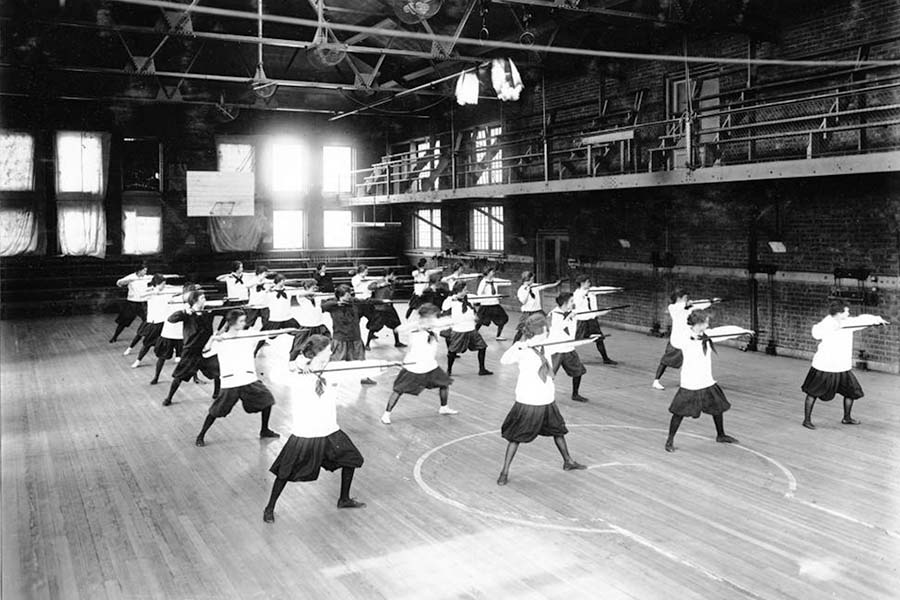
A black and white photo of a class of students in the aux gym.
Members of the women’s archery team practice in the Auxiliary Gym in the 1950s. Three archery teams won back-to-back-toback national championships— 1956, 1957, and 1958. Photo by Knox College Archives

“

The building is fundamentally sound, which is great, and its location on campus makes it important to the College.

—Lowell Dixon ’65

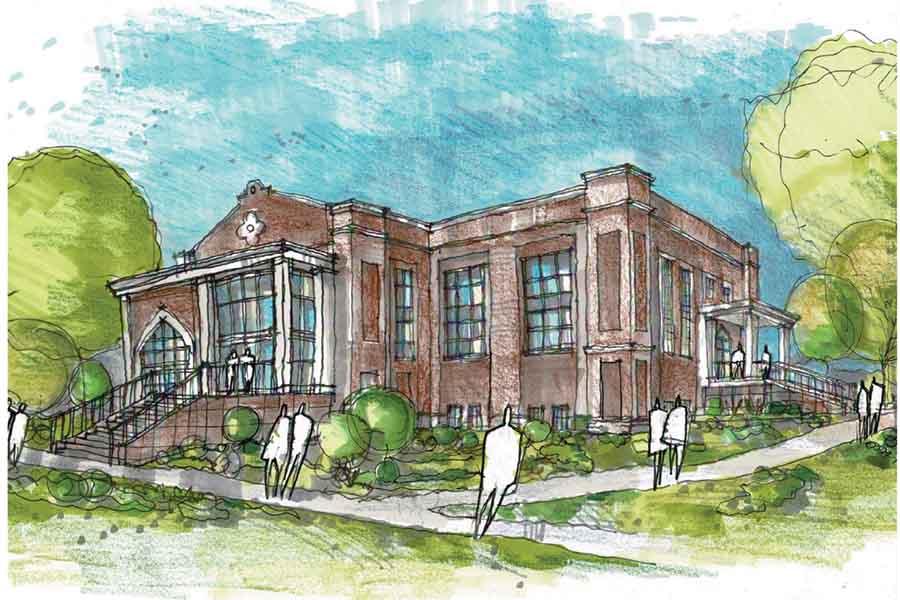
Thanks to ongoing maintenance, the structural integrity of Aux Gym’s foundational envelope remained sound, providing Knox with the opportunity to reimagine its third oldest building as a fully accessible campus welcome center. The College plans for Aux Gym to become a “front door” to Knox and Galesburg for prospective students and their loved ones and to provide much needed multi-purpose space for the College community. The main floor will house the Office of Admission, and remaining space in the building would be office, meeting, classroom, and study spaces to serve the entire Knox community.  

Reimagining Aux Gym as a vibrant welcome center at the heart of campus also allows the College to bring a truly comprehensive approach to enriching the student experience to life, as outlined in Our Strategy: A Bold & Ambitious Framework for Growth, approved by the Board in 2022. A renewed Aux Gym—and new home for the Office of Admission—opens the possibility to create a student-centered, one-stop shop for all student services in Alumni Hall, focused on preparing our students for postgraduate success.

After the conversation with President McGadney, Lowell and his wife Mariclaire decided they wanted to help make this new campus welcome center a reality, generously donating $2 million to jumpstart the project. “The building is fundamentally sound, which is great, and its location on campus makes it important to the College,” said Dixon. 

“Ensuring that Knox remains guided by its mission and history to provide opportunities for ambitious, smart, and innovative students from Illinois and beyond is what energizes and guides my work and that of our Board, staff, and faculty every day,” said President McGadney. “I am truly grateful to Lowell and Mariclaire for believing in and supporting this vital work.”

For many members of the Knox community, it’s hard to imagine that Aux Gym was once a vibrant home for Knox athletics and a beautiful example of Galesburg’s historic architecture. Thanks to a multi-million dollar gift from the Dixons, a new life for this historic campus building is on the horizon.

A rendering of what Aux Gym would be updated to look like.

Designed by Galesburg architect J. Grant Beadle and built by contractor J.A. Ream, Aux Gym was completed and dedicated on February 14, 1908. Flanked by Willard Field (now the South Lawn of Old Main), the building was used by both men’s and women’s athletic teams. In 1951, with the construction of Memorial Gymnasium on the southwest side of campus, the gymnasium was “redecorated” for women and was referred to as the “Women’s Gym” for many years. The “redecoration” also included an official indoor archery range, which Knox’s 1956, 1957, and 1958 National Championship-winning Women’s Archery teams used. As time passed, the women’s  athletic teams and training joined the men’s teams in Memorial Gymnasium. 

In 1979, when the neighboring Alumni Hall was closed due to its deteriorating condition, the College’s chapel was moved from Alumni Hall to Aux Gym. In the late 20th and early 21st century, the building became home to several academic and co-curricular programs, including fine arts, dance, and intramural athletics. Today, Aux Gym has sat vacant for approximately a decade following the long-awaited renovation of Alumni Hall, the purchase and renovation of the Second Baptist Church into the HOPE (House of Peace and Equity) Center, and construction of the new Whitcomb Art Center.

The Dixon’s generous donation has inspired other gifts to make the plan to renew Aux Gym a reality. Like Old Main, Seymour Library, George Davis Hall, and Alumni Hall before it, a reimagined Auxiliary Gymnasium will showcase Knox’s dedication to preserving and honoring its past while providing modern, accessible, and vibrant facilities for current and future Knox students.

“Preserving historic buildings like Aux Gym is essential for our campus, the City of Galesburg with which we share a deep and interconnected relationship, Knox County, and the State of Illinois,” shared President McGadney. “As we double-down on our mission—creating a community of individuals from diverse  backgrounds challenging each other to  explore, understand, and improve ourselves, our society, and our world—we know that  providing modern and accessible facilities while also preserving and celebrating our history is invaluable.”

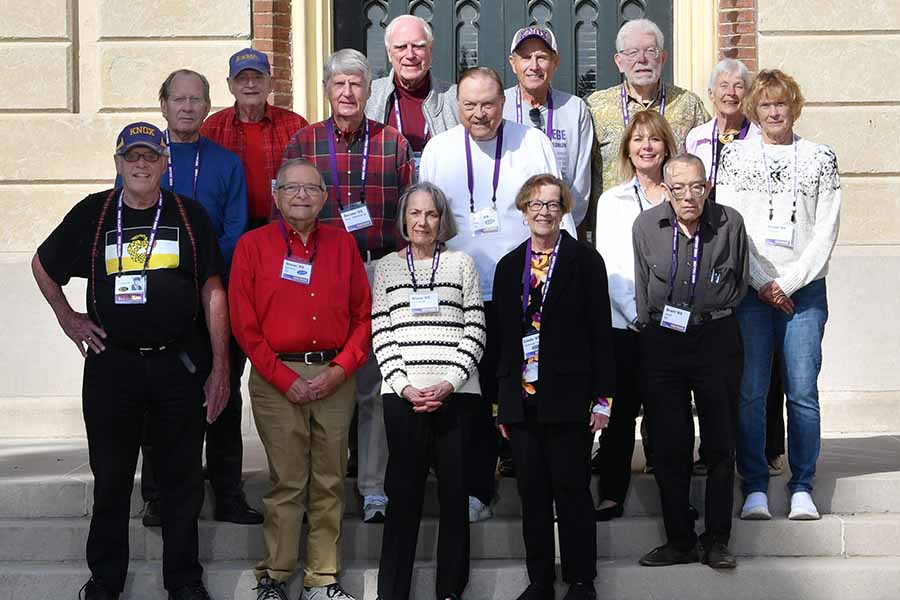
The Class of 1965 stands outside old main and poses for a photo.

Honoring the Class of 1965

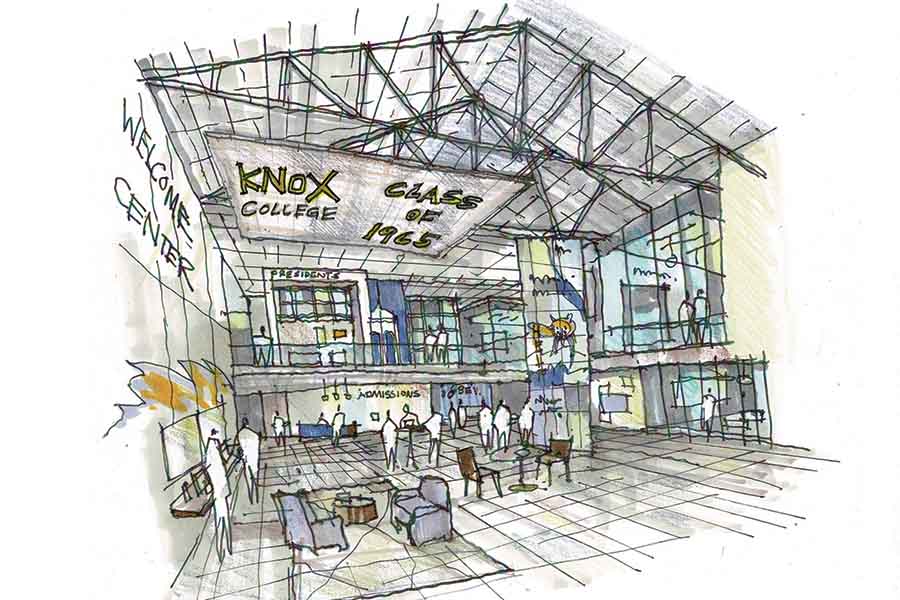
At the Dixon’s request, the Class of 1965 will receive prominent recognition in the repurposed building. President McGadney worked with the Dixons to make sure their wish was honored. “Andy made the agreement that the Class of 1965 will be  recognized in the Admissions area, and I’m excited about it,” said Dixon. Thanks to his efforts, the Class of 1965 Reception area soon will greet all visitors to the Knox campus.

A rendering of the inside of the Welcome Center.

Test: 4

Knox Magazine

Summer-Fall 2026

FP at 50

Celebrating Knox’s Most Common Academic Experience

By Scott Harris, Visiting Assistant Professor of Religious Studies and Faculty Liaison to the First-Year Experience

Books sit next to each other in a row on a shelf.

Over the past 50 years, Knox first-year students and faculty have shared one common  experience—First-Year Preceptorial, or FP as it is almost ubiquitously known at Knox. Not an introduction to college in general as much as it is an introduction to Knox and our shared legacy within the liberal arts tradition, FP is the one  common experience across the Knox curriculum.

This fall, incoming Knox students will experience a newly configured preceptorial, consisting of courses grouped together around big ideas and introducing students to the interdisciplinary breadth that makes a Knox education so powerful.

FP was designed to introduce students to the breadth and diversity of the liberal arts. This legacy is all the more important as the College continues to graduate students who can solve complex problems that require critical thinking, ethical judgement, and innovative ideas. This fall will mark the 50th anniversary of the program’s inception, which is a good time to reflect on how far the program has come over these five decades—and where it’s going in the future. 

Thinking back to our own experience, it’s probably easy for many of us to remember that strange mix of feelings that characterized the moment we first stepped onto the campus of our alma mater as a new student. There was certainly excitement to start a new journey, to be independent, to explore new ideas—but there was also anxiety. Will I make new friends? How hard am I going to have to work? How do I do laundry? In the midst of that flurry of goodbyes to family and greetings to new roommates, the students who arrived at Knox in the fall of 1976 had something new on the horizon that no other Knox student had yet experienced: Freshman Preceptorial (as it was then known). 

The 1976 debut of FP was a three-course  sequence designed to introduce students to  the liberal arts. This was a trial run before the program would be made mandatory for all new students in the 1977-1978 academic year. Over the ensuing years, the FP courseload was reduced to two courses in 1980, and then to one course in the 2002 fall term. The core mission of FP has endured throughout these changes, and, for 50 years, students have explored the liberal arts in preceptorial classrooms. 

This legacy continues through new innovations in the FP classroom. Beginning in the 2026 fall term, FP courses will be grouped together in “clusters,” each consisting of several sections all oriented towards a shared topic or idea. Each cluster of courses will explore big questions about the human experience through different disciplinary approaches and will provide a shared experience for students. In this way, faculty will lend their own distinctive expertise and students will be exposed to different ways of thinking.

This marks the latest work in helping FP meet students’ needs while still challenging them to think big. It is worth noting that FP emerged out of an effort by President E. Inman Fox to “enhance the intellectual atmosphere on campus.” Fox’s thinking was that a “common intellectual experience” would encourage students to discuss ideas and issues in new and interesting ways. The clusters of FP courses are meant to accomplish this by giving students a venue to learn from Knox faculty and from each other outside the boundaries of traditional academic disciplines.

Students will join their new peers in preceptorial classrooms to discuss how science fiction helps us learn what it means to be human, how the monstrous often says more about us than about the monster, how we perform our own identities, how film allows us to imagine new possibilities, and how games help us understand how we interact with the world around us. These guiding concepts will invite students into a conversation much larger than themselves, a conversation that has been happening at Knox in the First-Year Preceptorial for 50 years and, before that, in classrooms across the curriculum since 1837.

Fall 2026 FP Courses

Cinematic Visions
The Gothic Impulse in Film
Creating Monsters
Performance Studies
Playing with Biology
Playing with History
Playing with Religion
Playing with Sound
Science Fiction & Human Identity
Tacky, Trashy, Campy, Kitsch
The Art of Listening

The Evolution of FP

By Megan Scott ’96

First-Year Preceptorial, or FP as it is affectionately known, celebrates its 50th anniversary in fall 2026, and its longevity can be attributed, in part, to its numerous revisions. From the course’s structure to its reading list, FP has evolved with the College’s faculty and curricular focus. 

1969
Freshman Seminar added to the Knox curriculum, laying the foundation for FP. Seminar courses ranged from Why Read Literature? to Revolutions to Food  Production.

1974
Committee of faculty and students formed to discuss the creation of a course that would exemplify Knox’s commitment to the liberal arts.

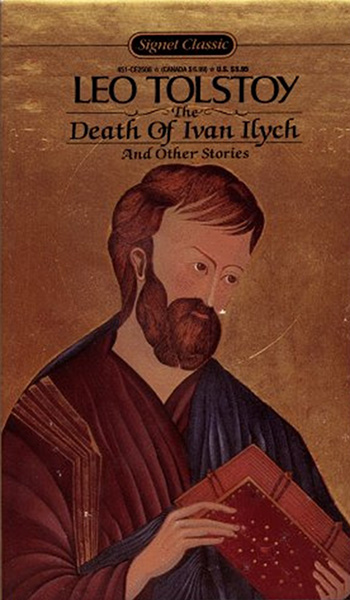
Book cover of Leo Tolstoy

1976
Freshman Preceptorial introduced as a three-term course: Perspectives on Being Human, Nature & Culture, Ways of Knowing. The Death of Ivan Illych by Leo Tolstoy was the required summer reading.

1977
FP officially made a core course in the Knox College curriculum.

1980
FP changed to two courses: Perspectives on Being Human and Nature & Culture.

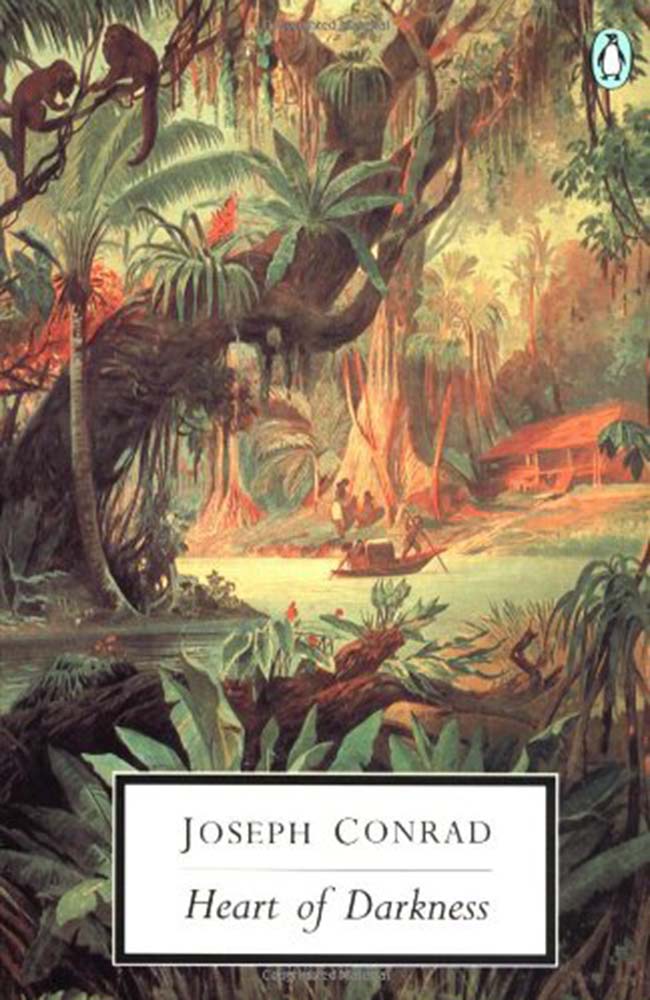
Joseph Conrad Heart of Darkness

1994
FP underwent major revision. Perspectives on Being Human was  replaced with Exploring Identity: The Beginning of a Journey. Advanced Preceptorial (an upper level,  multidisciplinary course that revisits core ideas of FP course) was added to the curriculum. Heart of Darkness by Joseph Conrad replaced The Death of Ivan Illych as the assigned summer reading.

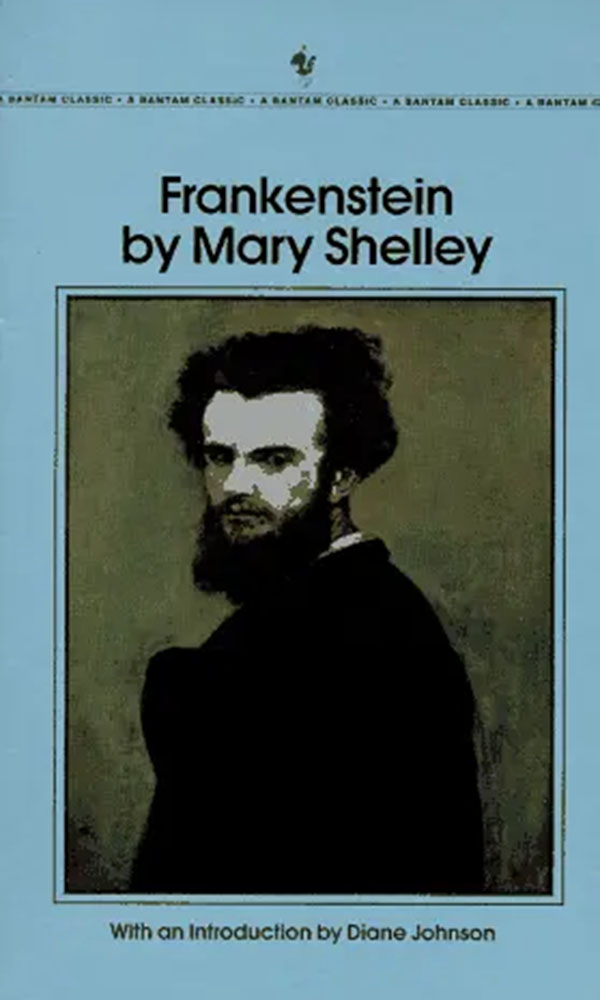
Frankenstein by Mary Shelley

1997
FP officially became Exploring Human Identity. Frankenstein by Mary Shelley was chosen as the new summer reading assignment.

2002
FP was offically changed to one course. Advanced Preceptorial is no longer a requirement.

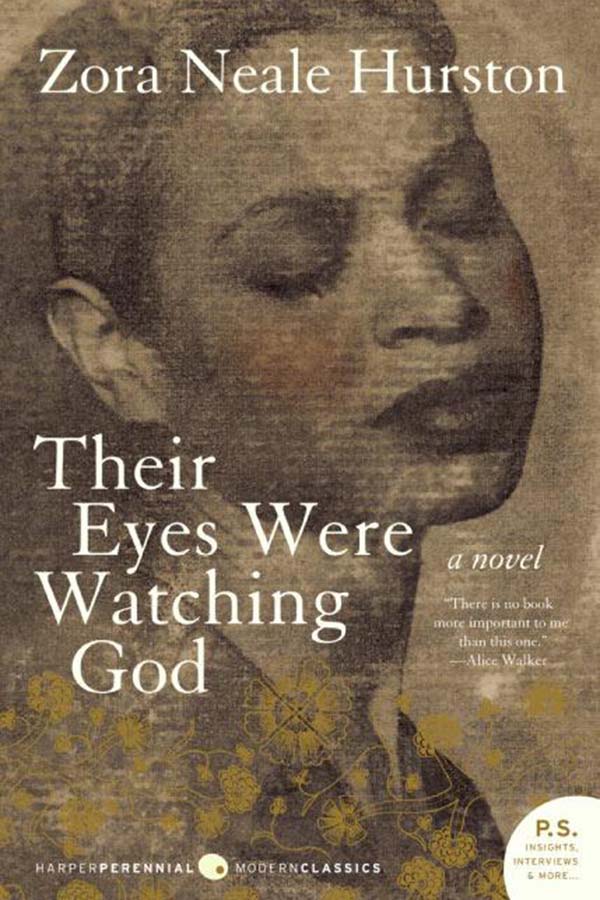
Their Eyes Were Watching God by Zora Neale Hurston

2004
On Making One’s Way replaced Exploring Human Identity. Their Eyes Were Watching God by Zora Neale Hurston was the summer reading assignment.

2007
Conversations in a World of Strangers replaced On Making One’s Way. Three common reading selections were introduced: The Autobiography of Malcolm X by Malcom X, Sparrow by Mary Doria Russell, and Cosmopolitanism: Ethics in a World of Strangers by Kwame Anthony Appiah.

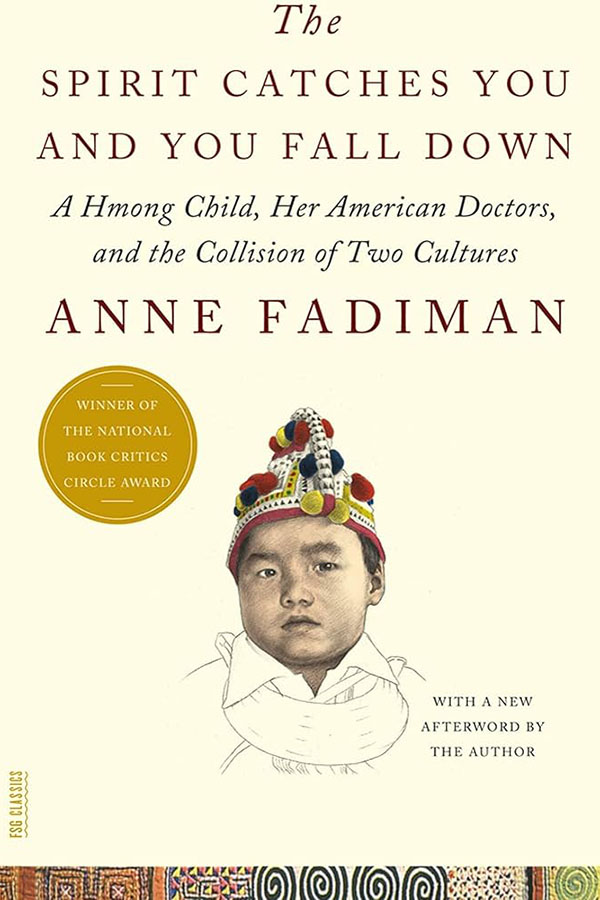
The Spirit Catches You and You Fall Down by Anne Fadiman

2008
The Spirit Catches You and You Fall Down by Ann Fadiman replaced Sparrow as the common reading selection.

2009
Conversation: How Talk Can Change Our Lives added to common reading list.

The Tempest by William Shakespeare

2010
New common reading texts were introduced: The Dignity of Difference by Jonathan Sacks, Persepolis by Marjane Satrapi, A Human Being Died that Night by Pumla Gobodo-Madikizela, and The Tempest by William Shakespeare.

2011
Common course and common readings are replaced with a series of evolving courses, such as Learning to See Water, Creating Monsters, Love, War, and The Challenge of Sustainability. 

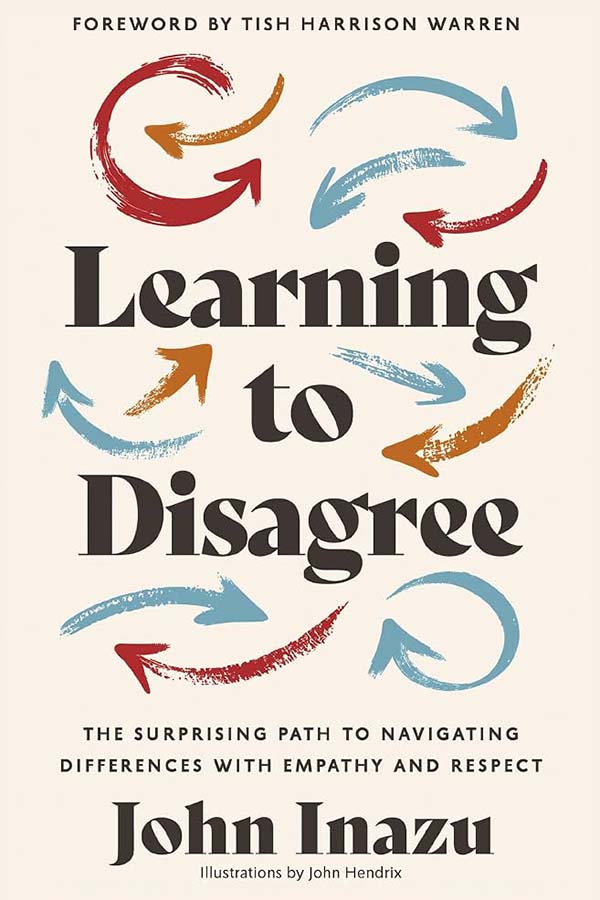
Learning to Disagree by John Inazu

2025
Learning to Disagree: The Surprising Path to Navigating Differences with Empathy and Respect by John Inazu introduced as the new summer common reading.

2026
Courses are now grouped together in “clusters,” each consisting of several sections all oriented towards a shared topic or idea, exploring big questions about the human experience.

“One of the best parts of my time at Knox”

For 50 years, FP has helped lay the foundation for a lifetime of intellectual discovery by encouraging students to explore the meaning of the liberal arts through thoughtful questions and discussions. As a required part of every student’s first year at Knox, FP has created countless memorable conversations and experiences over the decades. We asked alumni to share their memories on our social media channels, and here are a few of our favorites.

Sarah Weed Chandler ’97
“Penny Gold (history) was my FP professor. I never had another class with her, but 15 years later we went shopping in Beijing’s fabric markets together.”

Alex Dye ’95
“I remember my FP class with Jonathan Lee (philosophy), where I tried to connect the dots between bell hooks, Martin Luther King, Jr. and Public Enemy. I’m not sure I was ultimately successful, but FP challenged me to think horizontally and make cross- disciplinary connections—a skill and mindset that still serves me to this day.”

Mary V. Cantrell ’86
“Sue Hulett (political science) was my FP professor, and she’s one reason I didn't drop out after my first term. As an educator myself, I often think of my FP experience when reading the latest research on teaching pedagogy. No wonder I loved the class!”

Andrea Crain ’98
“My main memory from FP is that we all had to watch Apocalypse Now in the Kresge Auditorium, so we could compare and contrast it with Heart of Darkness, and it was horrifying and kinda traumatic.”

TJ McDonald ’88
“Has anyone gone back to reread some of these books? The Death of Ivan Ilyich hit me very differently as a guy in his late 50s.”

Taylor Walter ’15
“Amy Singer’s (anthropology and sociology) Learning to See Water FP had a massive impact on my Knox experience and continues to have an impact on me to this day. Many of my FP classmates became lifelong friends!”

Heather Frankland ’02
“I loved FP. I remember having to read Frankenstein before I came to campus for it. It’s still a book I love, have read many more times, and currently teach. Also, it was good to have discussions with peers who were interested in different disciplines … it enacted the liberal arts.”

Donna Mielke ’81
“My freshman year, we had preceptorials all three terms. It was described as an introduction to the liberal arts, but it was really so much more. The breadth and depth of the material we covered, along with the experience of having professors of all disciplines teaching outside their specialty, demonstrated for us students how to approach learning. The bonding of the common experience also served to bring together our entire class. It was honestly one of the best parts of my time at Knox.”

Christopher Solli ’98
“Advanced Preceptorial brought us all back together to focus on a theme, Frontiers, to refine our writing some more, and engage in more mature  discussions then as juniors and  seniors. . . . FP really introduced and cemented the Knox experience of  academic rigor, acquiring knowledge, and finding out that the questions asked are often more important than the answers you receive!”

Peter Weber ’86
“I didn't realize that Preceptorial was still relatively new when I was at Knox. The experience changed the path of my education and, as a result, the direction of my life. Bob Seibert ’64, P’01  (political science) taught my second trimester and ended up being the most influential person in my education.”

Test: 4

Knox Magazine

Summer-Fall 2026

Editor's Note

Megan Scott ’96

How often does a renowned broadcast  journalist receive an honorary degree from Knox College the same year its president reaches a leadership milestone? Not very often, so it was an easy decision to have 2026 honorary degree recipient and award-winning journalist Dorothy Tucker interview  President C. Andrew McGadney as he concludes his fifth year as the president of our prairie college. During their two-hour discussion, President McGadney and Ms. Tucker explored a wide variety of topics, from his start at Knox in 2021 to current enrollment challenges, the launch of the Venture Boldly comprehensive campaign, and his plans and aspirations for Knox.

President McGadney’s discussion with Ms. Tucker provides us with a rare moment to learn about the ways Knox’s leadership is moving the College forward at a challenging moment with clarity, optimism, and urgency. And when this discussion is paired with other magazine stories that celebrate 50 years of First-Year Preceptorial, a new vision for Auxiliary Gym, the Class of 2026, newly tenured and retiring faculty, and our alumni community, I’m certain this issue of Knox Magazine showcases the very best of Knox—a school small enough to nurture lifelong bonds between classmates and community members, yet big enough to reach every corner of the world where alumni can be found making a difference across all endeavors.

I’m proud to say that the Knox community’s influence far outweighs its size. Our dedicated faculty have taught and mentored alumni who have touched all facets of our world and its endeavors, professional and personal. Knox graduates have redefined American journalism, co-created the computer language that launched a digital revolution, participated in the renewal of space exploration, used cell phone technology to support public health, been recognized as teachers or coaches of the year, or simply volunteered to make their  communities better.* 

The 40-plus pages at the back of this magazine are also a wonderful reminder of the transformative power of a liberal arts education. Knox has been known as one of the Colleges that Change Lives since 1996, thanks to an education that challenges students to question, grow, and engage with individuals of all kinds. And the lives that are changed as a result go beyond a single individual, extending to friends and families, communities, cities, and nations. In this issue alone, I learned that Robert Long ’75 was elected to the board of directors of his law firm; Heidi Leuszler ’92 owns Berries & Flour, a line of native foods; Steve Batcha ’03 is both a pediatrician and a four-time American Ninja Warrior; and photographer Becky Duffyhill ’15 has documented every inaugural professional women’s game that has been in Denver. And that just scratches the surface!

At a moment in history when the value of higher education is being questioned and schools like Knox face headwinds like never before, I encourage you to dig into this issue of Knox Magazine. You’ll not only be proud of the amazing things the Knox community is doing, but you also have an opportunity to learn more about President McGadney’s vision for making this great big small school even better. When you’re done, I hope you’ve gained an even greater appreciation for our prairie college.

Happy reading,

Megan Scott ’96
Editor

*Alumni referred to in this sentence, in order of appearance: Ellen Browning Scripps, Class of 1859, and S. S. McClure, Class of 1882; Thomas Kurtz ’50; Carol Craig ’89; Matt Berg ’00; and far too many alumni to name.