
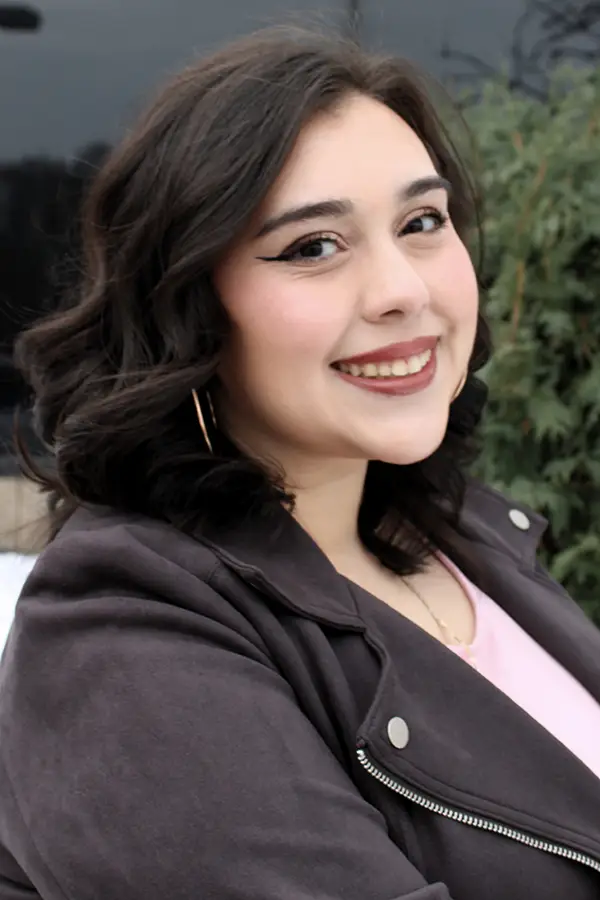
Ashley Pineda ’22 was a junior neuroscience major in fall 2020 when her mother was diagnosed with cancer. “I was taking physics, and it was hard to focus, so I had to drop the class,” she remembers. “I needed a language, and the only thing available was Spanish translation. I really got into it. The class worked with immigration and detention centers, transcribing audios for people in California. I really fell in love with it and asked Professor Robin Ragan if I could do a minor [in Spanish translation and interpretation].”
Pineda pursued the minor, and, today, she works for an immigration law firm as a case manager. Pineda is just one of the many Knox students and alumni who have explored the offerings within Knox’s Spanish translation and interpretation minor, spearheaded by Szold Distinguished Service Professor of Modern Languages Robin Ragan.
Personal Passion Leads to Program Innovation
The Spanish translation and interpretation minor began modestly. Its roots were planted in two half-credit courses, Spanish 205 (Introduction to Spanish Translation) and Spanish 206 (Introduction to Spanish Interpretation), taught by Szold Distinguished Service Professor of Modern Languages Robin Ragan in 2016. The course on translation focuses on text, while interpretation focuses on oral language. Originally designed to encourage more students to take Spanish courses, the half-credit classes piqued student interest and quickly developed into a new distinctive and popular academic program, with the addition of a medical interpretation course in the fall of 2018, followed by the minor in 2021.
Five years later, the program has grown in both student enrollment and accomplishments. “We’ve graduated 10 minors and have 11 right now, and 54 people have received the certificate to be qualified to interpret in a medical context in the United States,” said Ragan.
The minor and certification courses address important needs in preparing Spanish students for professional opportunities. It is distinguished by its hands-on approach that provides students with opportunities to work in local, national, and international communities. With a blend of language education, community engagement, and trauma-informed practice, the translation and interpretation program is a strong option for students aiming to develop practical Spanish language skills and acquire real-world experience.
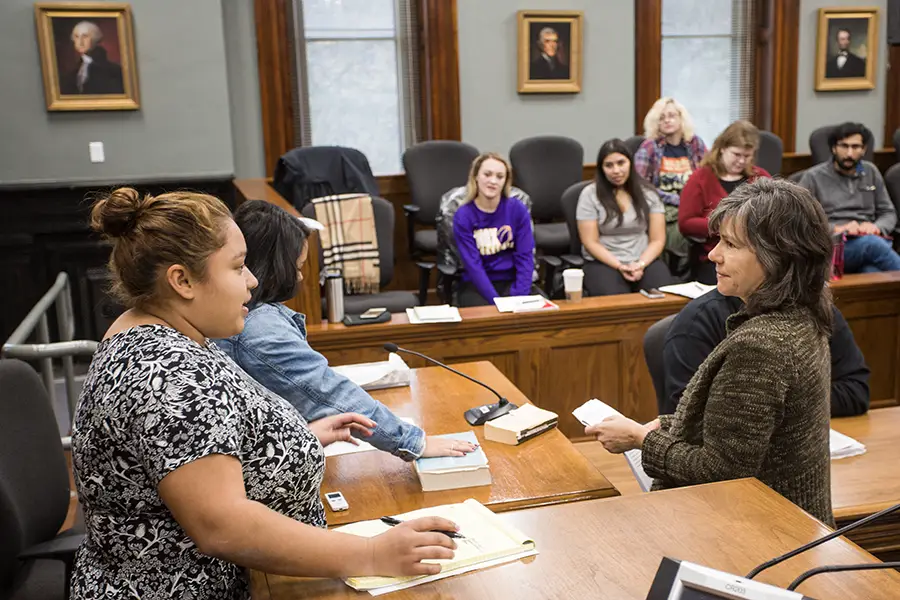
Ragan’s vision and leadership have driven the program’s growth at Knox. She began exploring work as an interpreter in 2014, holds certifications in medical and courtroom interpretation, and has worked on numerous projects in the United States and Mexico. She ultimately used this experience to broaden the offerings of the College’s Spanish program.
“I’m a practicing interpreter, and I have an active interpreting life. I’m in courthouses all over Illinois, so I can give the students a realistic idea of what the field is like, what the job market is like,” she said.
Qualified interpreters and translators are essential in legal, medical, and educational sectors. “When I got certified for medical interpreting, I realized I could do the same training on my campus, and my students could then enter into this field,” Ragan said.
“I learned what it would take, how a 40-hour experience would map onto a 10-week term, how would I make it work, and that’s how I came up with the medical interpreting course. Then shortly after that, ‘How about legal?’ We started the minor so students can have a minor in translation and interpreting; they can choose if they want this new minor or a traditional minor in Spanish.”
The curriculum for the Spanish translation and interpretation program that Ragan and her department built centers on project-based, practical applications of translation and interpretation in various professional fields like education, medicine, law, and social work. Courses like Spanish for Business, taught by Associate Professor of Spanish Fernando Gomez, Spanish for Healthcare, and Legal Interpreting prepare students for specific professions
Student Interest Spurs Program Growth
The classes, program, and minor immediately appealed to students, whether it was someone looking to enter the medical, educational, or legal field; a native Spanish speaker seeking to leverage their multilingual skills; or someone looking to make an impact by advocating for others.
Like Ashley Pineda ’22, many students were simply interested in the coursework, and that interest led some to pursue it as a minor, which often led to careers.
“I saw the class and thought it would be interesting. I ended up taking the class, and I liked it,” said Paula Flores Cevallos ’26, who is majoring in biology and double minoring in Spanish translation and interpretation and German. “I enjoyed the medical interpretation connection to the field. I want to go to med school after graduation, and my minor has given me the vocabulary I need.” Flores recently passed the written and oral portions of the National Board for Certified Medical Interpreters and is a certified interpreter.
“I like to say I fell into interpreting and translation by accident,” added Eric Espinoza ’23, program coordinator doing medical, legal, and education interpretation at Shirley Ryan Lab in Chicago. “I want to be a physician, which is why I took medical interpreting to learn more medical terminology in English and Spanish. Professor Ragan pointed out opportunities for me to volunteer, and that’s how everything started.”
First-Hand Experiences at Home and Abroad
While the classroom setting builds confidence and allows students to learn and prepare, the real-world settings that Ragan plans for students is where they truly thrive. Whether working in the Galesburg and Knox County community or going on the road to help, the translation and interpreting program is giving students invaluable immersive learning experiences.
Students are interpreting not only in legal and medical centers in the regional community but also in educational centers. Each term, Galesburg School District 205 brings in an intern from Knox College to help translate and interpret for families in the region. Interns are also needed in the county and neighboring communities.
“Our immigration population has shifted a little in Galesburg; we have more French speakers, and the Monmouth-Roseville school district also needs things translated,” Ragan said. “Galesburg has expert staff, including John Prats ’93 who serves as the English learner community liaison for Galesburg’s school district, but there are some things we can do to take the load off them.”
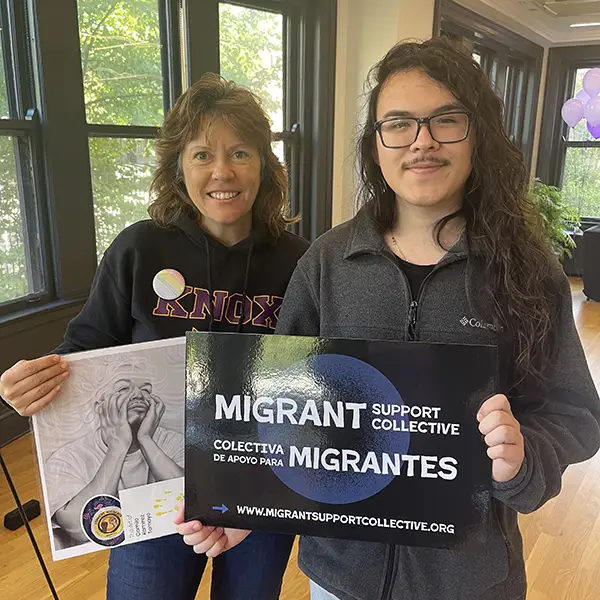
The students in her Legal Translation and Interpreting class recently helped with a manual for the Migrant Support Collective, based in Chicago, which works with detention centers across the country. Migrant Support Collective wrote a guidebook, How to Take Care of Yourself While You’re in Detention, as a guide for LGBTQ migrants in detention centers, many of whom are Spanish speakers. Their work will benefit people across the country. T he class also provided material for other national associations, including the National Center for Farm Workers, HIAS, Mutual Aid New York City.
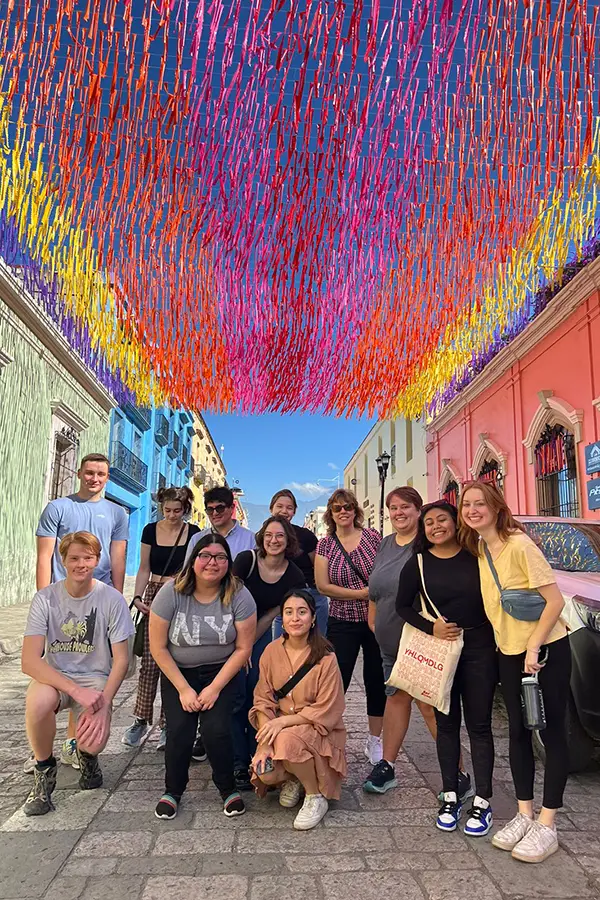
Some of the most impactful translation experiences take place in Oaxaca, Mexico. “I take students to Oaxaca every other December for an immersion program to work with Centro de Esperanza Infantil, an organization that supports children at risk of not attending school due to financial constraints. Once a year, the child writes a letter to their sponsor, and my students have had the translation job of translating their letters back to their sponsor.”
In another effort to give students the opportunity to see firsthand the impact their work can have, Ragan has regularly taken students to Southern Texas to aid in multiple ways. The class provides practical help for those looking to find their way in a new country and also partners with legal aid groups that work in detention centers or with people outside detention. The group will accompany lawyers to detention centers and serve as interpreters. While students can embrace the ups of their jobs, they also learn about the downs of hearing stories of people seeking a better life. Those stories and emotional experiences also push students to take a reflective look at their heritage.
“I remember telling Robin I was having nightmares about what happens to folks. It was pretty tough, but Robin is always so open and kind, so having her to vent about things made it easier to handle,” shared Espinoza.
“
“Forever grateful and appreciative of the classes I took at Knox and the experiences we had. It has served me well.”
—Akash Patel ’21
Preparing Students for Life After Knox
Whether students earn the medical interpreter certificate, the translation and interpreting minor, or just take the courses as part of their college experience, Ragan finds that the program’s experience helps students find meaningful work after graduation.
“I’ve been keeping track of my students; they’re doing all kinds of things,” she said. “One student ended up being a legal advocate working with domestic violence victims. He got his job because he speaks Spanish and shares that interpreting is the most marketable skill he has right out of college. Another student worked as a legal assistant at Catholic Charities Immigration Service and interpreted for lawyers. We also have social workers—one student worked for the National Immigrant Justice Center in Chicago, another was an environmental justice intern.”
Ragan recently heard from Akash Patel ’21, biochemistry major, who shared, “I’m wrapping up my third year of medical school now. I’m on my OBGYN rotation, and we had a patient come in yesterday who needed to urgently go for a C-Section. We had an interpreter on the phone, but being able to comfort her and guide her through the rapid progression in her care made such a difference. Forever grateful and appreciative of the classes I took at Knox and the experiences we had. It has served me well.”
Ragan’s students appreciate the guidance and support she provided during her courses. “I’m very grateful for the foundation Robin set,” said Montse Cancino Aguilar ’21, who is currently attending the Middlebury Institute of International Studies in Monterey, California. “I think her preparation prepared me for jobs, but also set up a stepping stone to be professional and work with her. I’m grateful for that.”
Ragan continues to work closely with students on projects submitted by organizations seeking professional assistance. For example, a student is working on translating a document written for families and friends of individuals in detention requested by the American Bar Association, and another recently finished the transcription and translation of a video featuring a discussion on how local communities can respond to ICE raids.
Other students are working on translating documents for local school districts. Ragan also continues to do pro bono work on asylum cases and recently had an article on interpreters in US asylum cases published in the book Interpretación y protección internacional normativa, práctica profesional y experiencias comparadas (Interpreting and International Protection Policies, Professional Practice and Comparative Experiences). She’s hoping to go back to the U.S./Mexico border with students this summer.
Looking ahead, Ragan said she’d “like to work on establishing more partnerships with law firms and free clinics so that I can reliably place students in these places as interpreters, once they are qualified.”
Putting the Knox Experience to Work
The Spanish translation and interpretation program has given its participants a leg up when it comes to graduate school and professional opportunities. Read more on how our graduates have used their coursework or minor to achieve post-graduate success, including:
Ashley Pineda ’22
Major: Neuroscience
Double minor: Dance and Spanish Translation & Interpretation
Current Position: A case worker at an immigration law firm in St. Paul, Minnesota
Francelia “Frenchie” Espinoza ’22
Major: Anthropology and Sociology
Minor: Biology and Health Studies
Graduate Degree: Master of Science in Nursing, Rush University College of Nursing
Current Position: Nursing Assistant, Rush University College of Nursing
Eric Espinoza ’23
Major: Biochemistry
Minors: Creative Writing, Spanish Translation & Interpretation
Current Position: Program coordinator doing medical, legal, and education interpretation at Shirley Ryan Lab in Chicago
Montse Cancino Aguilar ’21
Major: Biology and Latin American Studies
Minor: Spanish Translation & Interpretation
Current Position: Graduate student at the Middlebury Institute of International Studies in Monterey, California
Main Image: Szold Distinguished Service Professor of Modern Languages Robin Ragan (in sunglasses) poses with students studying healthcare, social work and education in Oaxaca, Mexico in 2018.