Test: 4

Knox Magazine

Winter 2026

Sustaining the Soul of the Institution

A Year of Faculty Milestones

By Megan Scott ’96

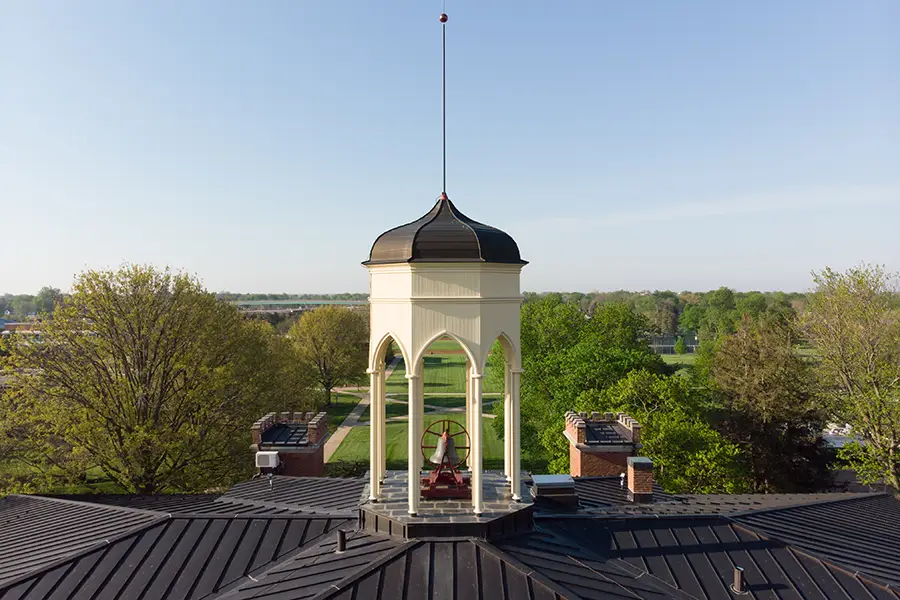
The top of Old Main Tower

“There are few professions that can impact individuals, communities, and the world like teaching at the collegiate level. Tenure is granted to a faculty member, not only in recognition for what they’ve already accomplished, but, and perhaps more importantly, for the promise we see in them.”

–Provost & Dean of the Faculty Melissa Glenn

If there is a generational-throughline that connects Knox alumni, it is the faculty. It’s not unusual for a  faculty member to receive their terminal degree, join the College faculty in their 30s and retire 30 or more years later. Their teaching provides generations of students with support and mentorship that lasts a lifetime, and their scholarship provides the foundation of the College’s academic experience. They are truly the soul of the College. 

The Knox faculty body is made up of many levels of impactful scholar-teachers, from instructors to adjunct or visiting professors, to those on the tenure track, starting with assistant and moving to associate and, ultimately, full professor.  The primary difference between instructors, visiting faculty, and tenure-track faculty is the promise of longevity at the institution. According to faculty regulations, “The rank of professor must be earned. . . . The record must show not only a strong performance as a teacher but also, and especially, the quality and quantity of scholarship and creative work to be expected of a full professor and senior member of the College faculty.”

This past year, Knox experienced a full cycle of tenure milestones—seven new tenure-track faculty were hired, four faculty received tenure, one faculty member was promoted to full professor, and six faculty received endowed professorships. Each of these faculty members contribute to the soul of the institution, bringing their scholarship and commitment to teaching to generations of Knox students.
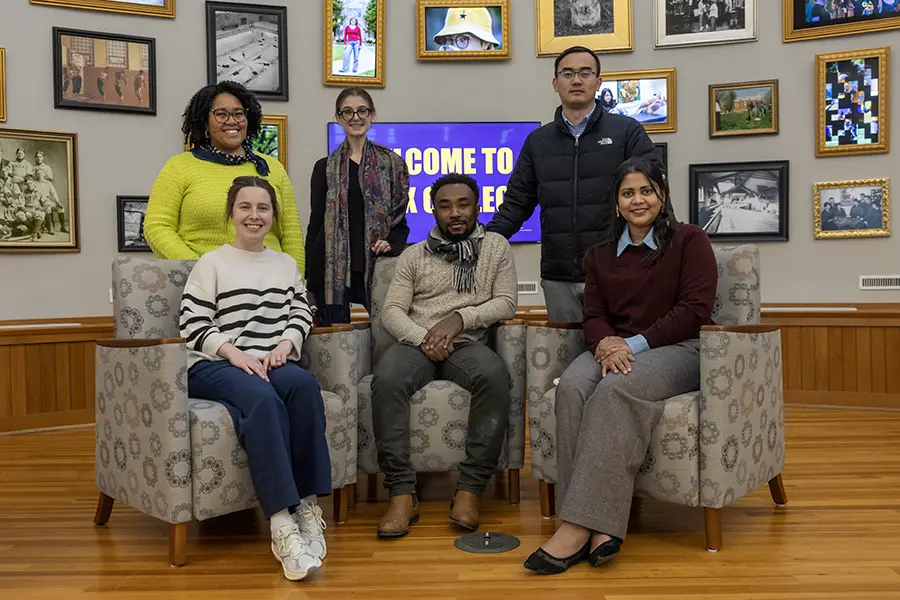
A group of faculty members sit and stand next to each other.
Seven new tenure-track faculty joined Knox in fall 2025. Standing (l-r): Amy Jones Haug (anthropology and sociology), Hanna Bradshaw (psychology), Shengting Cao (computer science). Sitting (l-r): Kaleigh Karageorge (enviroscience), Eugene Ofori Agyei (art), Jurdana Masuma Iqrah (computer science). Not pictured: Lumala Nelum Perera (chemistry). Photo by Steve Davis P’12

New Tenure-Track Faculty

Knox welcomed seven new tenure-track faculty to its academic program in August 2025. The new faculty span the arts and sciences, including art, chemistry, computer science, environmental studies, and psychology.

Eugene Ofori Agyei 
Assistant Professor of Art
B.A. in Industrial Art, Kwame Nkrumah University of Science & Technology, Ghana
M.F.A. in Ceramics, University of Florida

"I chose to join Knox because it was the right time to share my work more widely. Since arriving, I have been continually impressed by the faculty, students, and overall engagement throughout the campus community."

Hannah Bradshaw
Assistant Professor of Psychology
A.A, Carl Sandburg College. 
B.S. & M.S., Western Illinois University
M.S & Ph.D in Experimental Psychology, Texas Christian University.

"Growing up nearby in Abingdon, I always aspired to attend Knox. Now, I am grateful for the opportunity to be here and particularly enjoy seeing the impressive whale skeleton each day."

Shengting Cao
Assistant Professor of Computer Science 
B.S. in Computer Science & Ph.D. in Electrical & Computer Engineering, University of Alabama.

“I’m looking forward to teaching passionate students about programming.”

Amy Jones-Haug
Assistant Professor of Anthropology & Sociology
B.Sc. in Sociology & Cognitive Neuroscience, Yale University
M.Sc. & Ph.D. in Sociology, University of Wisconsin-Madison 

“The students here are incredible. They’re really inquisitive, you can tell they think how things connect together and that’s what makes teaching fun for me.”

Jurdana Masuma Iqrah
Assistant Professor of Computer Science
B.S. in Computer Science, University of Dhaka
Ph.D. in Computer Science, University of Texas at San Antonio 

“Knox is a great place; it is a welcoming community here. I’m excited to teach the students and have research opportunities with them.”

Kaleigh Karageorge
Assistant Professor of Environmental Sciences
B.A. in Corporate Communication, M.A. in Political Science & Ph.D. in Public Policy, Purdue University

"I appreciate Knox's focus on teaching and its commitment to campus culture and engagement. Working closely with students on research and contributing to the local area are important to me."

Lumala Nelum Perera 
Assistant Professor of Chemistry
B.S. in Chemistry, University of Ruhuna, Sri Lanka
Ph.D. in Chemistry, New Mexico Tech

“I’m very excited to be here and looking forward to teaching students. They’re really inquisitive, you can tell they think about how things connect together, and that’s what makes teaching fun for me.”
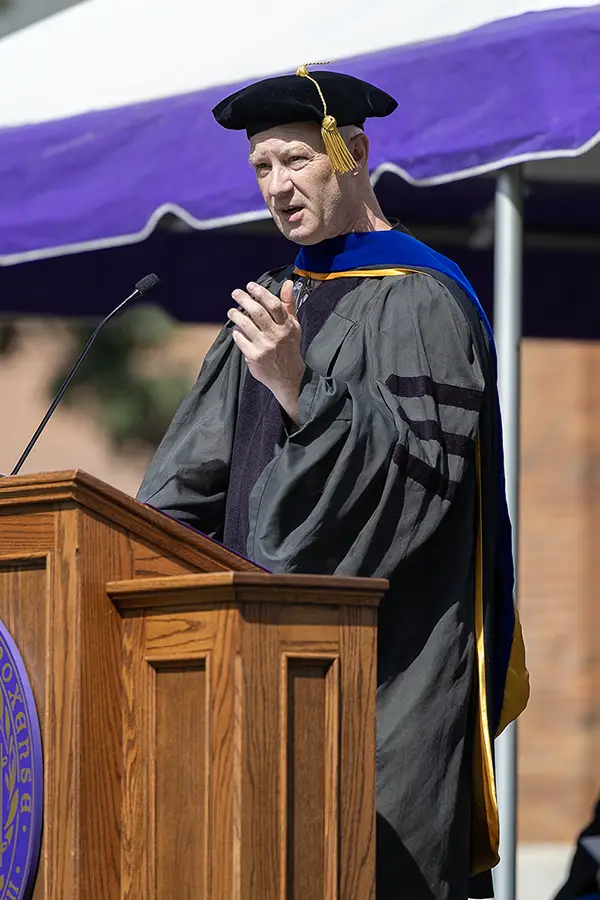
Mark Shroyer stands at a podium speaking.

Faculty Promotions

Four faculty members received tenure and promotion to associate professor in May 2025: Thomas Bell (political science), Roya Biggie (English), Deirdre Dougherty (educational studies), and Leanne Trapedo Sims (peace and justice studies). Read more about their promotion on the Knox website. In addition, Mark Shroyer was promoted to full professor in physics by the Knox College Board of Trustees this past September, effective at the start of the 2025-26 academic year. 

A faculty member since 2005, Shroyer earned his bachelor of science degree from Truman State University in 1993. He went on to obtain both his master's degree and Ph.D. in physics from Oregon State in 1995 and 1999, respectively. His teaching interests are broad, spanning introductory physics, modern physics, classical dynamics, electrodynamics, statistical mechanics, and the physics of sports and music.

“You will become part of this campus, and Knox will become part of you.”

—Professor of Physics Mark Shroyer to students at Opening Convocation, Fall 2025

While at Knox, Shroyer has secured multiple grants, including the National Science Foundation Major Research Instrumentation Grant, the Knox Faculty Research/Creative Work Grant, and two Ellen Browning Scripps Foundation Grants, one which helped secure the Observatory Dome and another to upgrade the Mössbauer Spectrometer. His contributions to physics extend beyond grant work. Shroyer has authored multiple publications and delivered national and international presentations throughout his career. STEM outreach in the community is one of his top priorities, and he has participated in Science Nights at local elementary schools, taught College for Kids for many years, and has been part of MathCounts, an engaging math program for middle school students, for over 15 years.

When asked what the title “professor” means to him, Shroyer noted, “Early in my career at Knox there were a number of senior colleagues that I would view and say internally 'That's a professor.' Chuck (Charles) Schulz ’72 [physics], Lance Factor [philosophy], Liz Carlin Metz [theatre], to name a few. While I now share the title, I don't yet feel like I'm in that group. But that's the legacy I want to live up to.”

Endowed Professorships

Endowed professorships serve as a way to honor and reward faculty members for their accomplishments and years of service. Appointments are the highest honor Knox College can bestow on a faculty member and continue the College’s commitment to excellence in teaching and research. Knox College now boasts 22 endowed professorships and chairs, including the six who received professorships in 2025.
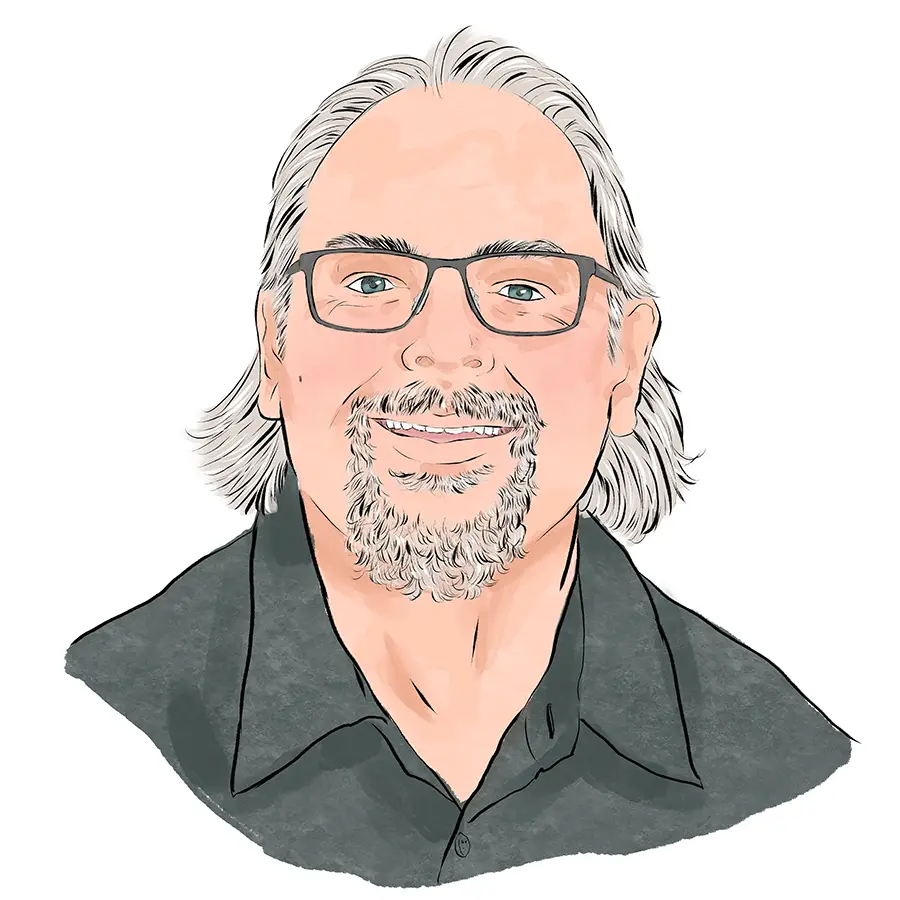
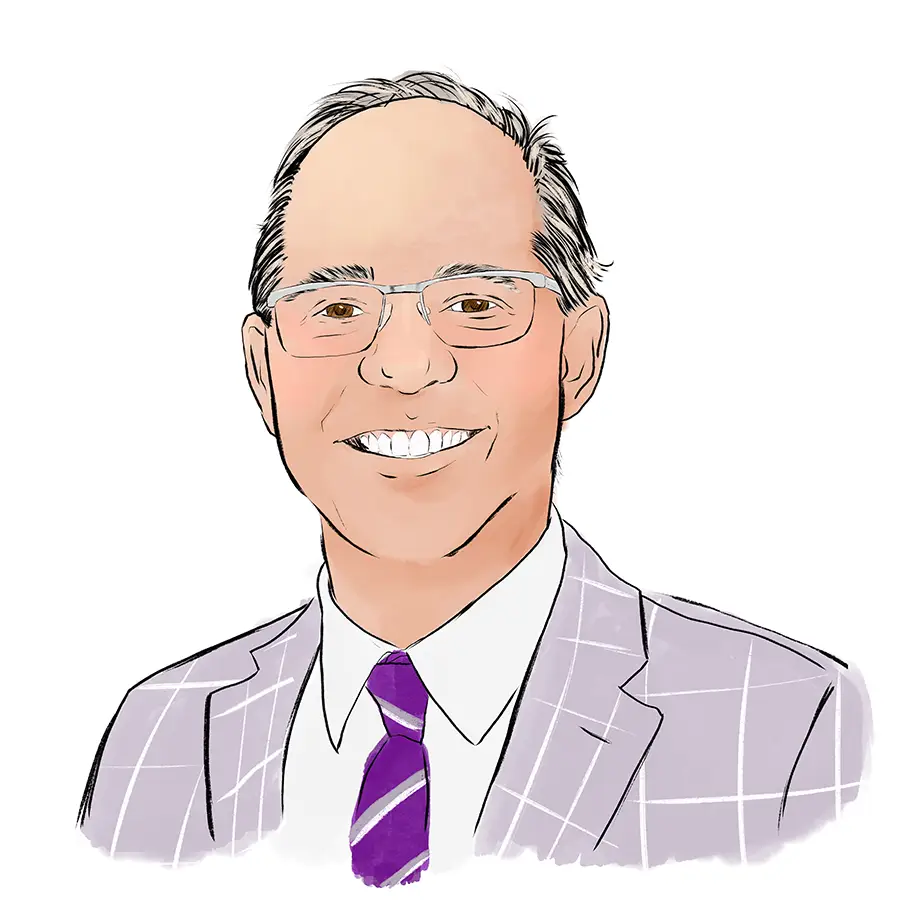
An illustration of Craig Choma.

Craig Choma ’93
Chancie Ferris Booth Distinguished Service Professor in Theatre

Chancie Ferris Booth Distinguished Service Professor in Theatre 
Choma joined Knox’s faculty in 1996 after earning a B.A. in theatre and philosophy from Knox in 1993 and two MFAs, one in scenic and one lighting design, from Carnegie Mellon in 1996. His teaching interests include design and technology for stage and screen, scenic design, lighting design, and scenic art. In addition to designing productions at Knox College, Choma also has worked in New Orleans, Madison, Milwaukee, Chicago, and internationally in France on multiple occasions. Among his professional accomplishments, Choma has presented at national conferences, including "Dance & Design: Fostering Collaboration through Curriculum" at the National Dance Education Organization Conference and "Collage, Metaphor & Fusion: Collaborating Across the Disciplines" at the International Conference on the Arts & Humanities.

What is the professional accomplishment of which you are most proud?

I was one of the principal designers for the Vitalist Theatre Company in Chicago, working with them on numerous productions for over a decade. The artistic director was my colleague, Liz Carlin Metz. The professional work I did with that company was some of my best. The biggest highlight was an award winning production of Mother Courage and Her Children for which I was the scenic designer.

What do you hope your students take away from one of your courses? 

My biggest hope is that students will learn to look at and engage with the world in new ways, having hopefully become more observant about how design literally surrounds us. From architecture, landscape design and urban development to graphic design, product design, industrial design and entertainment design, we live in a carefully curated world, a myriad of design choices surrounding us at every turn. Becoming aware of how (and why) the world is designed helps to focus the young designer's mind on how to use visual design elements to enhance theatrical storytelling at the highest level. 

What do you believe is most valuable about a Knox education?

Students at Knox learn how to think, not what to think. Students learn how to be critical, asking questions and digging deeper. They are encouraged to formulate their own opinions and be able to talk about and defend those opinions. Knox students also learn the value of their own independence and their own voice, while also recognizing the value of being a contributing member to maintaining a healthy campus community. All of these things help graduates become exemplary citizens and lifelong scholars.

An illustration of Gregory Gilbert.

Gregory Gilbert
George Appleton Lawrence Distinguished Service Professor in Art History

Gilbert joined the faculty in 1995 after earning a B.F.A. in art history from the University of Kansas in 1981, a museum studies certificate in 1983, and an M.A. and Ph.D.  in art history from Rutgers University in 1984 and 1998, respectively. His teaching interests include curatorial studies; contemporary American and European art; 19th-century art and architecture; American art, architecture, and culture; Native arts of the Americas; the interpretation of works of art, visual culture theory; Andy Warhol and the visual culture of the 1960s, and collage. His current research explores the relationship between Abstract Expressionist art and the mass visual culture of World War II, as well as the connections between Pragmatist philosophy, American poetry, and the early Abstract Expressionist art of Robert Motherwell. He has worked as a museum curator for such museums as the Figge Art Museum and the Zimmerli Art Museum and currently serves as the vice president on the board of directors of the College Art Association. Gilbert's scholarship has been published in books by MIT Press, Rutgers University Press and Routledge Press as well as in such periodicals as the Oxford Art Journal, CAA Art Journal, Arts and The Brooklyn Rail. He has also authored numerous exhibition catalogs, and his exhibits have been reviewed in The New York Times. Gilbert also directs the art museum studies minor program, which includes courses in museum issues and practices and trains students in the curating of exhibitions. 


What is the professional accomplishment of which you are most proud?

I am the first tenure-track art historian hired at Knox and have directed and taught the art history program single-handed for most of my 30 years at the college. I am especially proud that over 200 students have graduated with an art history major or minor. Many of these alumni went on to graduate art history programs and now hold major art museum and teaching positions. In terms of my broader career, it has also been gratifying to have remained active with my scholarship and curating.

What do you hope your students take away from one of your courses?

In both my introductory and advanced courses, one of my main aims is for students to fully grasp the rich and complex interdisciplinary basis of art history. I want them to understand and appreciate how fully art and visual culture intersects with all areas of society.

What do you believe is most valuable about a Knox education?

Despite profound shifts in higher education, I think what is most valuable is our ongoing commitment to the liberal arts ethos, our dedication to training students to think and work in critical, creative ways. However, Knox has also adapted this traditional ethos to new academic trends for more socially conscious and pre-professional forms of education. This kind of curricular innovation includes the art museum studies minor, which I developed to bridge academic art history with a more applied career pathway for students.
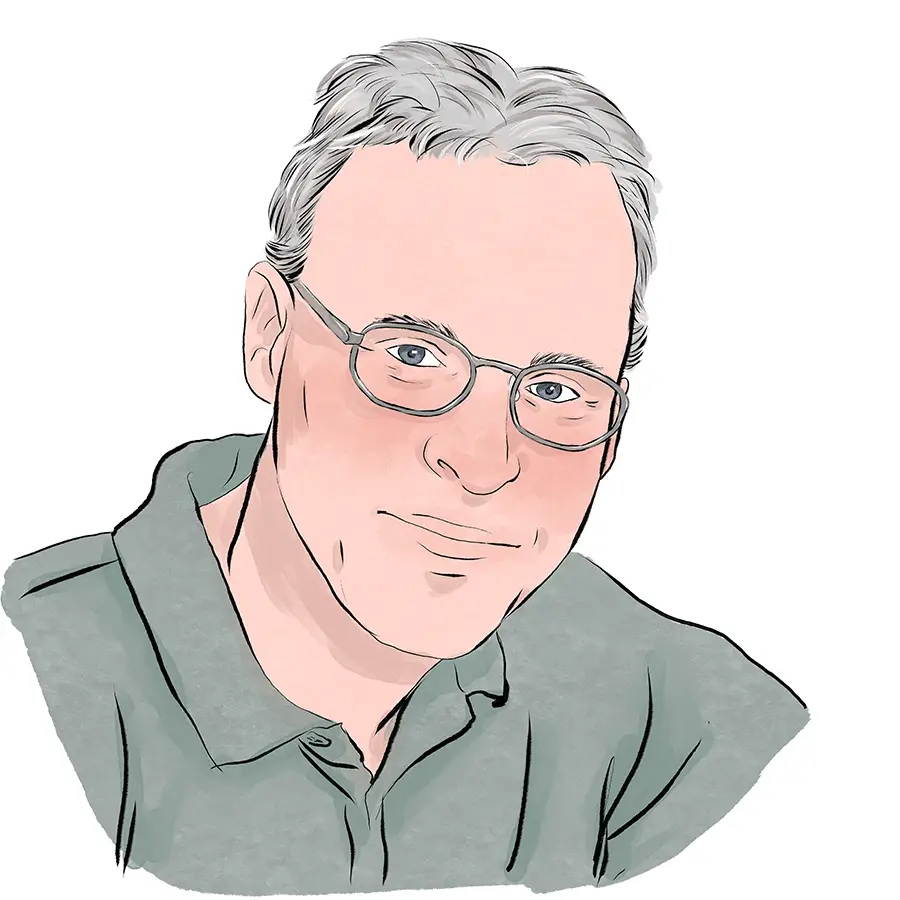
An illustration of Thomas Moses

Thomas R. Moses, 
Cornelia H. Dudley Professor in Physics

Moses joined the faculty at Knox College in 1992. He received his B.S. in physics and mathematics from Stanford, graduating Phi Beta Kappa in 1987. He earned his M.A. in physics from the University of California, Berkeley, in 1990, and his Ph.D. in physics from the same institution in 1993. His teaching interests include physics, analytical mechanics, electricity and magnetism, quantum mechanics, thermodynamics, and statistical mechanics. He is the recipient of a National Science Foundation-Solid State Chemistry grant, Surface Ordering and Anchoring Energy in Nematic Liquid Crystals, and has authored or co-authored several publications appearing in the American Journal of Physics and Physics Teacher, among others.

What is the professional accomplishment of which you are most proud?

I’d say it was coming here fresh out of grad school and building a working research experiment from scratch. That was really challenging. Hundreds of parts to order, new instruments to learn, custom electronics to design and build, computer control code to write, and parts to fabricate in the machine shop (had to acquire one of the key machine tools as well), grants to write, and many late nights. What a relief when it actually worked!

What do you hope your students take away from one of your courses? 

Thinking about the introductory sequence course Heat, Waves, and Light that I’m teaching in the Winter Term, there are many take-aways. I hope students acquire or deepen their appreciation of how physical theory can explain and provide insight into their world, from daily phenomena like how their car engine works, or how much energy is in a brownie to more global issues like planetary warming. I hope students develop their mathematical reasoning skills and take away the ability to make quantitative estimates, as well as the complementary ability to be able to critically evaluate the quantitative or logical claims made by others. And, naturally, I hope students find that doing physics can be great fun and maybe even the best possible job.

What do you believe is most valuable about a Knox education?

I’d say access—access to faculty members and highly trained and committed staff members. My own background was at large research institutions, and while there are of course advantages and disadvantages for any kind of institution, I never had anywhere near the access to trained and committed experts that I see Knox students benefiting from. Being able to work side by side with professors on their research projects or learn to set up, operate, and create on the wide variety of tools in our new Makerspace under the guidance of our science technician—these really valuable experiences are happening every day at Knox.

An illustration of Brandon Polite

Brandon E. Polite ’03
R. Lance Factor Endowed Professor of Philosophy

Polite joined the faculty at Knox College in 2007. He earned his B.A. in philosophy from Knox College in 2003.He earned his M.A. and Ph.D. in philosophy from the University of Illinois in 2005 and 2010, respectively. His teaching interests include aesthetics, philosophy of art, philosophy of music, Greek philosophy, and symbolic logic. Polite’s research has been widely published in academic journals, and he is the editor of Taylor Swift and the Philosophy of Re-recording: The Art of Taylor's Versions. He is also the host of the YouTube series, Polite Conversations: Philosophers Discussing Art, where he talks to other philosophers about their work in aesthetics and the philosophy of art, diving into their views in a fun and engaging way. He recently completed a three-year term as Trustee of the American Society for Aesthetics.

What is the professional accomplishment of which you are most proud?

My edited volume, Taylor Swift and the Philosophy of Re-recording: The Art of Taylor’s Versions. Bringing together a crack team of scholars to think through the philosophical implications of Swift’s re-recording project, and working with them to develop their ideas and eventually bring them into the world, was incredibly rewarding. It ended up being the most-read book in Bloomsbury’s Philosophy Library in 2025, indicating that all our hard work paid off! 

What do you hope your students take away from one of your courses? 

I hope students leave my courses with an appreciation for the value of playing with ideas—of treating concepts and arguments as things to be explored, tested, and reshaped rather than merely memorized or dismissed. More than mastering particular theories or texts, I want them to develop intellectual curiosity, interpretive charity, and the confidence to take their own judgments seriously while remaining open to alternative positions that could positively enhance or even upend their own. Ideally, I hope they come away seeing philosophy not as a set of abstract puzzles, but as a living practice that helps them make better sense of the world and their place within it. 

What do you believe is most valuable about a Knox education?

What I find most valuable about a Knox education is that we give students the space to explore ideas openly, ask questions freely, and learn how to listen and respond thoughtfully, even when disagreeing. This encourages them to reflect on their own assumptions, appreciate multiple perspectives, and approach new ideas with humility and care, which are incredibly important skills to have in today’s world.
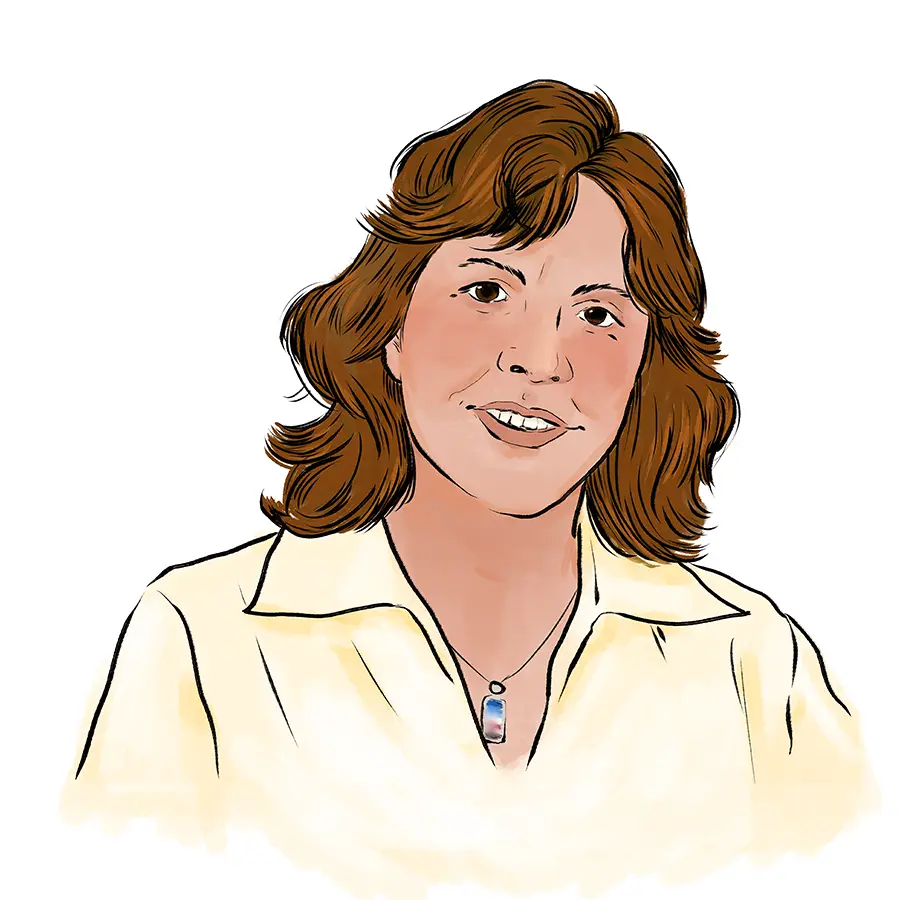
An illustration of Robin Ragan

Robin Ragan
Szold Distinguished Service Professor in Modern Languages 

Ragan joined the faculty at Knox College in 2000. She earned her B.A. from the University of Illinois in 1993. She earned her M.A. from the University of Illinois in 1995 and her Ph.D. from the University of Illinois in 2001 in Spanish. Her teaching interests are Spanish translation and interpreting, Spanish literature (19th and 20th centuries), representations of women, medical issues in literature, Spanish youth movements, and digital storytelling. Most recently, she has spearheaded the College's efforts to introduce Spanish translation and interpretation into the curriculum, working with students on numerous projects in the United States, including Galesburg and the southern border, and Mexico. She has received over a dozen honors and grants during her time at Knox College, including the Phillip Green Wright Award for Excellence in Teaching in 2024 and 2006. She also served as director of the Eleanor Stellyes Center for Global Studies for five years and has taken students abroad nine times to countries including Argentina, Spain, and Mexico.

What is the professional accomplishment of which you are most proud?

I would say getting the translation and interpreting program off the ground at Knox. That was something that was years in the making, and I think brought something very unique to Knox and certainly enriched my life in many ways. It was because of this program that I honed my own translation and interpreting skills, got deeply involved in asylum work, and resparked my love of language. 

What do you hope your students take away from one of your courses? 

I hope they reflect on the power and magic of words. One of the songs I like to play in class has a line that hopes for a future in which “the dictionary stops bullets.”  When you learn a language, you become hyper aware of word choice and connections between words, like the subtle, but powerful difference between house and home.

What do you believe is most valuable about a Knox education?

This is a hard one, because there are many valuable things…but to single out just one, I’d say access—access to faculty members and highly trained and committed staff members. My own background was at large research institutions, and while there are advantages and disadvantages for any kind of institution, I never had anywhere near the access to trained and committed experts that I see Knox students benefiting from. Being able to work side by side with professors on their research projects or learn to set up, operate, and create on the wide variety of tools in our new Makerspace under the guidance of our Science Technician—these really valuable experiences are happening every day at Knox.

An illustration of Michael Schneider

Michael A. Schneider
Burkhardt Distinguished Chair in History

Schneider joined Knox College’s faculty in 1992 after earning his B.S. in chemistry from Michigan State University in 1984, M.A. in Far East history from the University of Chicago in 1985, and Ph.D. in modern Japanese and international history from the University of Chicago in 1996. His teaching interests include East Asian civilization, modern China, modern Japan, social life of food, culture, and diplomacy in modern East Asia, approaches to international history, and nationalisms. Schneider has been featured in several publications and delivered countless presentations during his time at Knox College. He has also earned several honors and grants for his work while at Knox. Schneider also held many administrative positions at Knox College, serving as associate dean for four years, as director of the Eleanor Stellyes Center for Global Studies for eight years, interim dean of the College from 2017-18, and as provost and dean of the College from 2019-2025.

What is the professional accomplishment of which you are most proud?

I would be hard pressed to place any individual accomplishments ahead of the $1.2 million Mellon Foundation "Abolition for All Time" Grant. A grant project of this scale is, by definition, a collective achievement. As lead author of the proposal and its shepherd through the stages of the foundation's review, I know how critical the many contributions of ideas and suggestions were to the proposal's success. Indeed, the organic unity of the ideas within it and our proposals' clear response to faculty development and institutional needs of the moment were plainly evident to the foundation. Coming out of the pandemic, we have been able to foster collaborations across campus and advance student digital projects in ways we could only dream of before it.

What do you hope your students take away from one of your courses? 

My fervent wish is that students leave my courses with the belief that the course material is truly for them. In East Asian studies, we can be exploring fairly esoteric stuff that may feel distant and alien, from a time and place students may not recognize as immediately relevant to their lives. When we get to the moments when students want to engage in debates over archeological evidence from 3000 years ago or connect with characters in a 1000-year old novel or care about battles for freedom and democracy 100 years ago, I figure we are doing something right.

What do you believe is most valuable about a Knox education?

I would start with "ownership" to which I would immediately add "experience." A transformative education occurs when students begin charting their own educational paths while having access to experiential learning opportunities to extend and expand those choices. The alchemy of owning one's education combined with unanticipated experiences generates outcomes that can be unexpected and wonderful. I am not certain that my own education was designed to produce such outcomes, but I hope I can contribute something to an education like that today.
Test: 4

Knox Magazine

Winter 2026

Spanish Translation & Interpretation Minor Hits Its Stride

Students and Alumni Benefit from Innovative Program Offerings

By Scott Holland & Megan Scott ’96

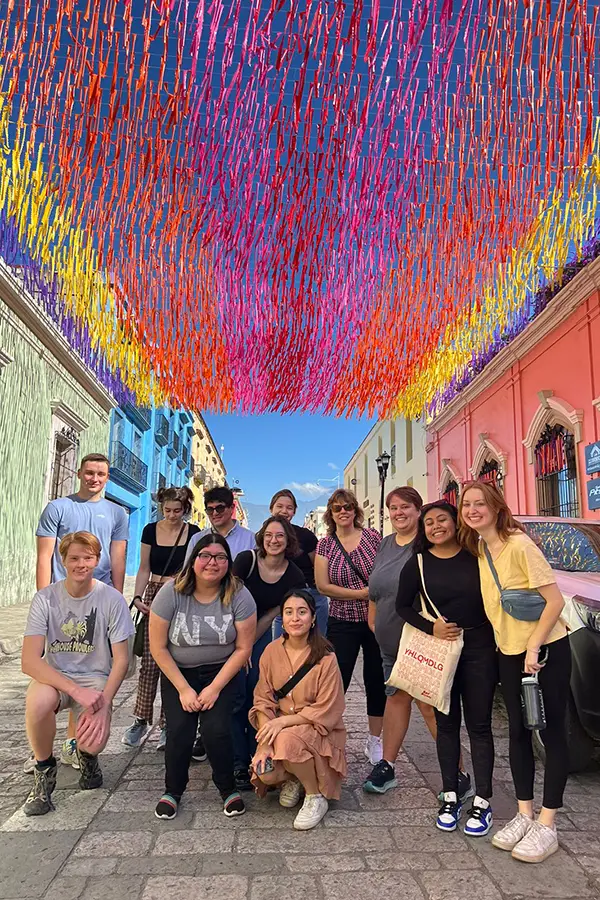
Szold Distinguished Service Professor of Modern Languages Robin Ragan (in sunglasses)  poses with students studying healthcare, social work and education in Oaxaca, Mexico in 2018.
Ashley Pineda ’22

Ashley Pineda ’22 was a junior neuroscience major in fall 2020 when her mother was diagnosed with cancer. “I was taking physics, and it was hard to focus, so I had to drop the class,”  she remembers. “I needed a language, and the only thing available was Spanish translation. I really got into it. The class worked with immigration and detention centers, transcribing audios for people in California. I really fell in love with it and asked Professor Robin Ragan if I could do a minor [in Spanish translation and interpretation].”

Pineda pursued the minor, and, today, she works for an immigration law firm as a case manager. Pineda is just one of the many Knox students and alumni who have explored the offerings within Knox’s Spanish translation and interpretation minor, spearheaded by Szold Distinguished Service Professor of Modern Languages Robin Ragan.

Personal Passion Leads to Program Innovation

The Spanish translation and interpretation minor began modestly. Its roots were planted in two half-credit courses, Spanish 205 (Introduction to Spanish Translation) and Spanish 206 (Introduction to Spanish Interpretation), taught by Szold Distinguished Service Professor of Modern Languages Robin Ragan in 2016. The course on translation focuses on text, while interpretation focuses on oral language. Originally designed to encourage more students to take Spanish courses, the half-credit classes piqued student interest and quickly developed into a new distinctive and popular academic program, with the addition of a medical interpretation course in the fall of 2018, followed by the minor in 2021.

Five years later, the program has grown in both student enrollment and accomplishments. “We’ve graduated 10 minors and have 11 right now, and 54 people have received the certificate to be qualified to interpret in a medical context in the United States,” said Ragan.

The minor and certification courses address important needs in preparing Spanish students for professional opportunities. It is distinguished by its hands-on approach that provides students with opportunities to work in local, national, and international communities. With a blend of language education, community engagement, and trauma-informed practice, the translation and interpretation program is a strong option for students aiming to develop practical Spanish language skills and acquire real-world experience.

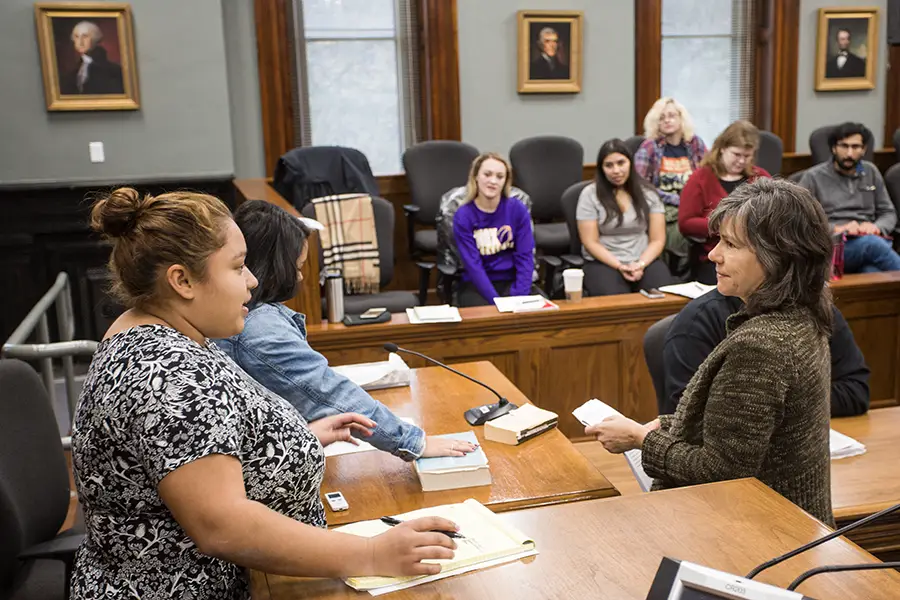
Szold Distinguished Service Professor of Modern Languages Robin Ragan (far right) participating in a mock trial at the Knox County Courthouse with her students in Introduction to Interpreting.
Szold Distinguished Service Professor of Modern Languages Robin Ragan (far right) participating in a mock trial at the Knox County Courthouse with her students in Introduction to Interpreting. Photo by Peter Bailley ’74, P’05, P’08

Ragan’s vision and leadership have driven the program’s growth at Knox. She began exploring work as an interpreter in 2014, holds certifications in medical and courtroom interpretation, and has worked on numerous projects in the United States and Mexico. She ultimately used this experience to broaden the offerings of the College’s Spanish program.

“I’m a practicing interpreter, and I have an active interpreting life. I’m in courthouses all over Illinois, so I can give the students a realistic idea of what the field is like, what the job market is like,” she said.

Qualified interpreters and translators are essential in legal, medical, and educational sectors. “When I got certified for medical interpreting, I realized I could do the same training on my campus, and my students could then enter into this field,” Ragan said.

“I learned what it would take, how a 40-hour experience would map onto a 10-week term, how would I make it work, and that’s how I came up with the medical interpreting course. Then shortly after that, ‘How about legal?’ We started the minor so students can have a minor in translation and interpreting; they can choose if they want this new minor or a traditional minor in Spanish.”

The curriculum for the Spanish translation and interpretation program that Ragan and her department built centers on project-based, practical applications of translation and interpretation in various professional fields like education, medicine, law, and social work. Courses like Spanish for Business, taught by Associate Professor of Spanish Fernando Gomez, Spanish for Healthcare, and Legal Interpreting prepare students for specific professions

Student Interest Spurs Program Growth

The classes, program, and minor immediately appealed to students, whether it was someone looking to enter the medical, educational, or legal field; a native Spanish speaker seeking to leverage their multilingual skills; or someone looking to make an impact by advocating for others.

Like Ashley Pineda ’22, many students were simply interested in the coursework, and that interest led some to pursue it as a minor, which often led to careers.

“I saw the class and thought it would be interesting. I ended up taking the class, and I liked it,” said Paula Flores Cevallos ’26, who is majoring in biology and double minoring in Spanish translation and interpretation and German. “I enjoyed the medical interpretation connection to the field. I want to go to med school after graduation, and my minor has given me the vocabulary I need.” Flores recently passed the written and oral portions of the National Board for Certified Medical Interpreters and is a certified interpreter.

“I like to say I fell into interpreting and translation by accident,” added Eric Espinoza ’23, program coordinator doing medical, legal, and education interpretation at Shirley Ryan Lab in Chicago. “I want to be a physician, which is why I took medical interpreting to learn more medical terminology in English and Spanish. Professor Ragan pointed out opportunities for me to volunteer, and that’s how everything started.”

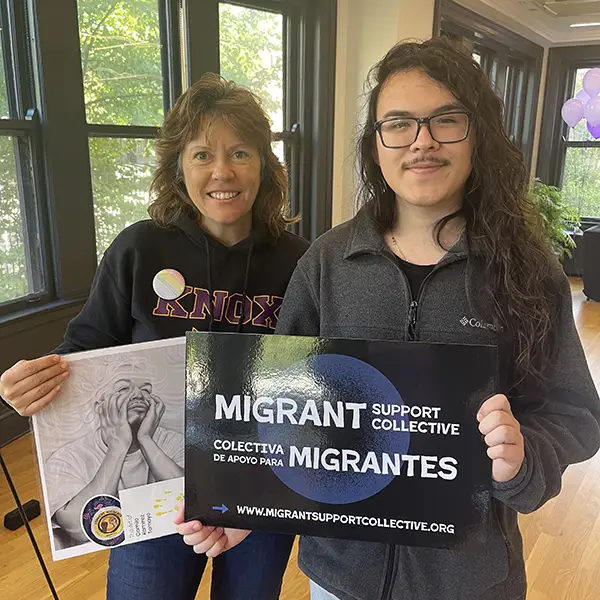
Professor Robin Ragan and Eric Espinoza ’23
Professor Robin Ragan and Eric Espinoza ’23 at a benefit for Chicago’s Migrant Support Collective. Ragan and her students recently translated a brochure for the organization.

First-Hand Experiences at Home and Abroad

While the classroom setting builds confidence and allows students to learn and prepare, the real-world settings that Ragan plans for students is where they truly thrive. Whether working in the Galesburg and Knox County community or going on the road to help, the translation and interpreting program is giving students invaluable immersive learning experiences.

Students are interpreting not only in legal and medical centers in the regional community but also in educational centers. Each term, Galesburg School District 205 brings in an intern from Knox College to help translate and interpret for families in the region. Interns are also needed in the county and neighboring communities.

“Our immigration population has shifted a little in Galesburg; we have more French speakers, and the Monmouth-Roseville school district also needs things translated,” Ragan said. “Galesburg has expert staff, including John Prats ’93 who serves as the English learner community liaison for Galesburg’s school district, but there are some things we can do to take the load off them.”

The students in her Legal Translation and Interpreting class recently helped with a manual for the Migrant Support Collective, based in Chicago, which works with detention centers across the country. Migrant Support Collective wrote a guidebook, How to Take Care of Yourself While You’re in Detention, as a guide for LGBTQ migrants in detention centers, many of whom are Spanish speakers. Their work will benefit people across the country. T he class also provided material for other national associations, including the National Center for Farm Workers, HIAS, Mutual Aid New York City. 

Some of the most impactful translation experiences take place in Oaxaca, Mexico. “I take students to Oaxaca every other December for an immersion program to work with Centro de Esperanza Infantil, an organization that supports children at risk of not attending school due to financial constraints. Once a year, the child writes a letter to their sponsor, and my students have had the translation job of translating their letters back to their sponsor.”

In another effort to give students the opportunity to see firsthand the impact their work can have, Ragan has regularly taken students to Southern Texas to aid in multiple ways. The class provides practical help for those looking to find their way in a new country and also partners with legal aid groups that work in detention centers or with people outside detention. The group will accompany lawyers to detention centers and serve as interpreters. While students can embrace the ups of their jobs, they also learn about the downs of hearing stories of people seeking a better life. Those stories and emotional experiences also push students to take a reflective look at their heritage.

“I remember telling Robin I was having nightmares about what happens to folks. It was pretty tough, but Robin is always so open and kind, so having her to vent about things made it easier to handle,” shared Espinoza.

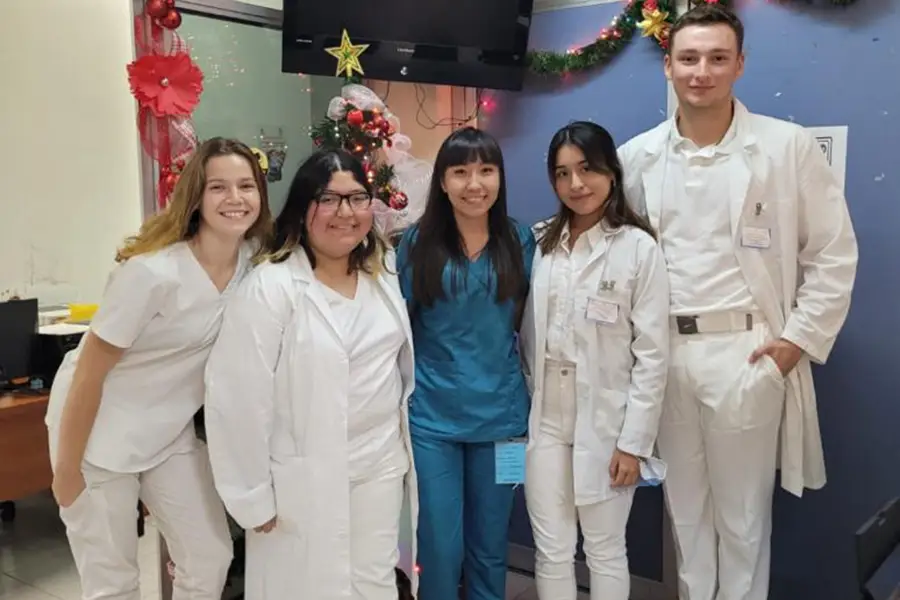
Students participated in a medical shadowing program during an immersive trip to Oaxaca, Mexico.
Students participated in a medical shadowing program during an immersive trip to Oaxaca, Mexico. From left to right: Katie Bigham ’24, Dayana Gonzalez- Lopez ’25, Oaxacan medical student, Sonia Lopez ’24, Colbin Clark ’25.

“Forever grateful and appreciative of the classes I took at Knox and the experiences we had. It has served me well.”

—Akash Patel ’21

Preparing Students for Life After Knox

Whether students earn the medical interpreter certificate, the translation and interpreting minor, or just take the courses as part of their college experience, Ragan finds that the program’s experience helps students find meaningful work after graduation.

“I’ve been keeping track of my students; they’re doing all kinds of things,” she said. “One student ended up being a legal advocate working with domestic violence victims. He got his job because he speaks Spanish and shares that interpreting is the most marketable skill he has right out of college. Another student worked as a legal assistant at Catholic Charities Immigration Service and interpreted for lawyers. We also have social workers—one student worked for the National Immigrant Justice Center in Chicago, another was an environmental justice intern.”

Ragan recently heard from Akash Patel ’21, biochemistry major, who shared, “I’m wrapping up my third year of medical school now. I’m on my OBGYN rotation, and we had a patient come in yesterday who needed to urgently go for a C-Section. We had an interpreter on the phone, but being able to comfort her and guide her through the rapid progression in her care made such a difference. Forever grateful and appreciative of the classes I took at Knox and the experiences we had. It has served me well.”

Ragan’s students appreciate the guidance and support she provided during her courses. “I’m very grateful for the foundation Robin set,” said Montse Cancino Aguilar ’21, who is currently attending the Middlebury Institute of International Studies in Monterey, California. “I think her preparation prepared me for jobs, but also set up a stepping stone to be professional and work with her. I’m grateful for that.”

Ragan continues to work closely with students on projects submitted by organizations seeking professional assistance. For example, a student is working on translating a document written for families and friends of individuals in detention requested by the American Bar Association, and another recently finished the transcription and translation of a video featuring a discussion on how local communities can respond to ICE raids.

Other students are working on translating documents for local school districts. Ragan also continues to do pro bono work on asylum cases and recently had an article on interpreters in US asylum cases published in the book Interpretación y protección internacional normativa, práctica profesional y experiencias comparadas (Interpreting and International Protection Policies, Professional Practice and Comparative Experiences). She’s hoping to go back to the U.S./Mexico border with students this summer.

Looking ahead, Ragan said she’d “like to work on establishing more partnerships with law firms and free clinics so that I can reliably place students in these places as interpreters, once they are qualified.”

Putting the Knox Experience to Work

The Spanish translation and interpretation program has given its participants a leg up when it comes to graduate school and professional opportunities. Read more on how our graduates have used their coursework or minor to achieve post-graduate success, including:

Ashley Pineda ’22
Major: Neuroscience
Double minor: Dance and Spanish Translation & Interpretation
Current Position: A case worker at an immigration law firm in St. Paul, Minnesota

Francelia “Frenchie” Espinoza ’22
Major: Anthropology and Sociology
Minor: Biology and Health Studies
Graduate Degree: Master of  Science in Nursing, Rush University College of Nursing
Current Position: Nursing Assistant, Rush University College of Nursing

Eric Espinoza ’23
Major: Biochemistry
Minors: Creative Writing, Spanish Translation & Interpretation
Current Position: Program coordinator doing medical, legal, and education interpretation at Shirley Ryan Lab in Chicago

Montse Cancino Aguilar ’21
Major: Biology and Latin American Studies
Minor: Spanish Translation & Interpretation
Current Position: Graduate student at the Middlebury Institute of International Studies in Monterey, California

Main Image: Szold Distinguished Service Professor of Modern Languages Robin Ragan (in sunglasses) poses with students studying healthcare, social work and education in Oaxaca, Mexico in 2018.

Test: 4

Knox Magazine

Winter 2026

Features

Venture Boldly

Grant Support Expands the Impact of Historic Comprehensive Campaign

By Megan Scott ’96

Knox College’s first comprehensive campaign in more than 20 years, Venture Boldly, recently crossed the $145 million mark enroute to its $175 million goal. Nearly 13%—or $19 million—of Venture Boldly funding has come from foundations, big and small, and the State of Illinois. Key to Knox’s success, this grant funding supports projects and initiatives that are fundamental to the College’s ability to deliver a residential liberal arts education. 

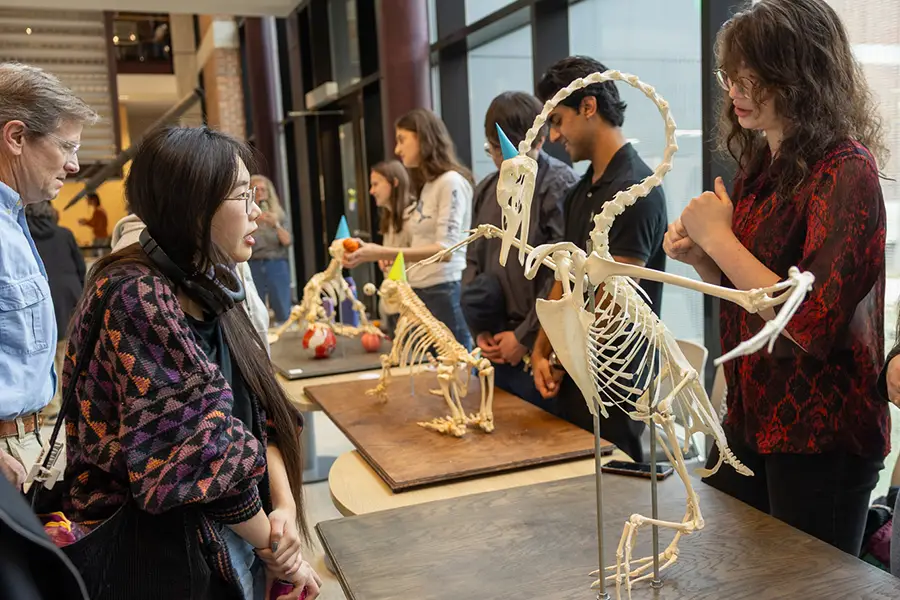
Knox students showcase their work in anatomy in the atrium of the Umbeck Science-Mathematics Center.
Knox students showcase their work in anatomy in the atrium of the Umbeck Science-Mathematics Center. The center is currently under renovation thanks to a $10 million grant from the Illinois Department of Commerce and Economic Opportunity. Photo by Steve Davis P’12

“Grants underscore the importance that foundations and organizations play in sustaining and advancing higher education in our country, and here at Knox. They support all of the key components of a Knox education—students and scholarships, faculty teaching and research, new and existing academic programs, and capital projects,” said Marin Amundson-Graham, vice president for advancement. “They are an important foundation of Venture Boldly, reflecting both the comprehensive nature of the campaign and the power of partnership.”

The two dozen institutions that have awarded Knox grants over the course of the Venture Boldly campaign range from small family to large private foundations and also include regional and national government agencies.

“Grants often allow us to support pilot projects, help programs try something new and daring, support one-time events or programs, or purchase specialized equipment for student and faculty research that aren’t part of our regular operating budget,” shared Fallon Allison, director of college grants. “Grants also provide essential funding for student opportunities such as research projects, internships, or immersive experiences that are central to their learning and growth as scholars and citizens.”

Allison handles all corporate and foundation grants, as well as state and federal grants. She works directly with faculty and staff on project development, proposal writing, grant communication, and other areas of grant support and stewardship.

“One of the things I love most about my role is working with a cross-section of campus. I have the privilege of hearing Provost and Dean of the Faculty Melissa Glenn discuss her vision for faculty professional development or how she sees Knox preparing students for the future; staff in Knox’s centers share the good work they are doing; Senior Staff members communicate about capital projects and updating campus infrastructure; faculty members describe the new programs, speakers, or equipment they would like to bring to campus. I have a great view of all of the dedicated people it takes to operate a liberal arts campus,” added Allison.

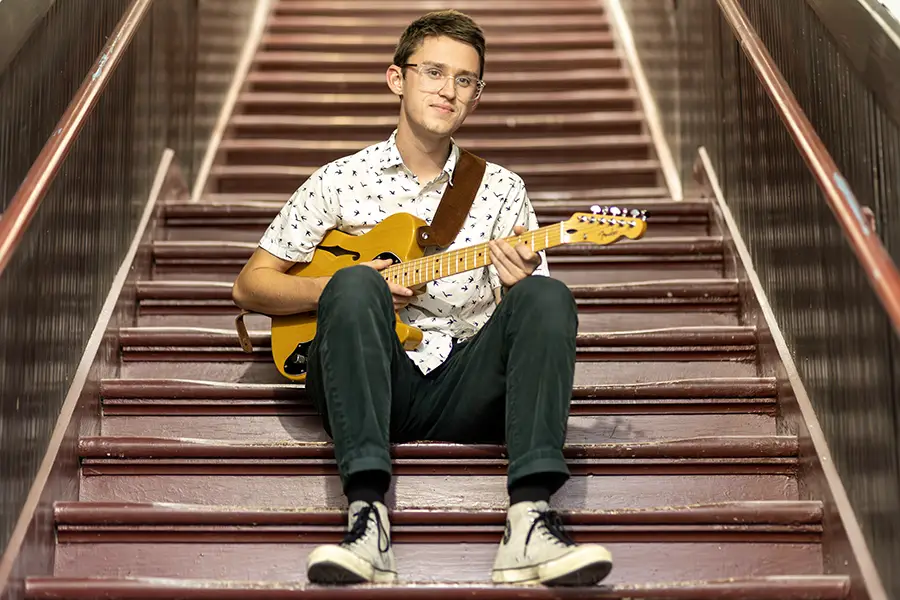
Brandon Roberts ’25 sits on a set of stairs while holding a guitar.
Brandon Roberts ’25 received Richter funding to support research projects and presentations. He is now working on his master’s degree at the University of Chicago Divinity School. Photo by Steve Davis P’12

“To receive grant funding. . . confirms for me that the work that we do here at Knox every day is important for the futures of our students, as well as the future of our society.”

—President C. Andrew McGadney

The support from foundations and agencies provides the College with crucial financial resources and is also a direct vote of support for Knox’s mission and education.

“To receive grant funding from the Mellon Foundation, the National Science Foundation, and National Endowment for the Humanities, among others, confirms for me that the work we do here at Knox every day is important for the futures of our students, as well as the future of our society,” said President C. Andrew McGadney. “I am also humbled by the number of Knox family and friends who support the College through private and family foundations, from the Kohler Foundation and the Ellen Browning Scripps Foundation, to the Galesburg Community Foundation and Richter Memorial Foundation.”

Making a Great College Even Better

Grants from public and private agencies or foundations have a tremendous impact on all facets of the Knox community: To drive strategic growth, enrich the student experience, and invest in our community. Below are a few examples of grants received during the Venture Boldly comprehensive campaign and their impact on Knox and its community.

Illinois Department of Commerce and Economic Opportunity: Transforming Umbeck Science-Mathematics Center

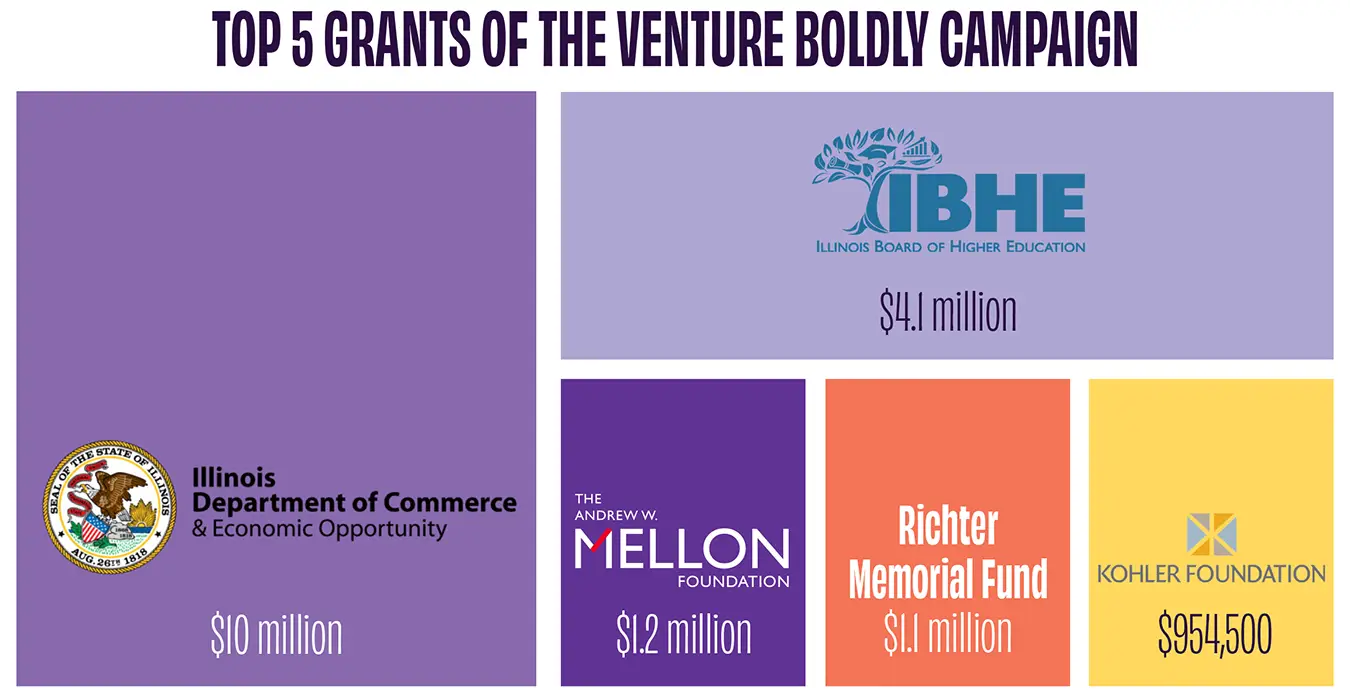
A $10 million grant from the State of Illinois’ Department of Commerce and Economic Opportunity is funding the current renovation of the Umbeck Science-Mathematics Center (SMC). Knox is partnering with two regional companies, RATIO Design and Russell, on the renovation. The current project will focus primarily on the building’s C-Wing, which houses the chemistry classrooms and laboratories, common spaces, and faculty offices, as well as upgrades to building systems.

“Knox is grateful to the Department of Commerce and Economic Opportunity for its investment in Knox, the State of Illinois for its investment in higher education across the state, and our partners, RATIO and Russell, as we embark on this transformative capital project,” said President C. Andrew McGadney. “As an historic campus, investments in academic buildings and infrastructure are crucial to ensuring that teaching and learning take place in modern, state-of-the-art facilities.”

The Mellon Foundation: Abolition for All Time

In December of 2025, the College completed our multi-year Abolition for All Times project, funded by a $1.2 million grant from the Andrew W. Mellon Foundation. The grant promoted and enhanced work that Knox does well: interdisciplinary collaboration. Dozens of faculty developed new curricula and engaged with new, digital teaching tools. Although the grant project has ended, interdisciplinary work continues on campus, and faculty pursuit of grant funding for new projects is robust. This year, faculty have sought grants to bring world-class speakers to campus, to support arts programming, to perform cutting-edge research with students, to gather data on student success, and to design and support new approaches to teaching signature Knox classes.

Richter Memorial Fund: Supporting the Hallmark of a Knox Education

Providing support for the hallmark of a Knox educational experience—immersive learning—for 30 years, the Richter Memorial Fund has granted Knox $1.1 million over the course of the Venture Boldly campaign. During the 2025-26 academic year, the College received $325,000, the largest amount the College has received in a single year. The annual grants support Knox students pursuing projects that encourage critical thinking and exploration. Two hundred independent research, collaborative projects, or creative projects by Knox students—all guided by faculty mentors—are funded by Richter each year. Since 1995, the fund has provided more than $3.7 million to support experiential learning.

Richter recently funded an honors project, collaborative research project, and presentations at multiple professional conferences for Brandon Roberts ’25. Brandon is now enrolled in the master of arts program in philosophy of religions and the Bible at the University of Chicago Divinity School. Creative writing projects for Kris Pandey ’25 and Nathan Hill ’25, who are both attending the renowned University of Iowa Writer’s Workshop, were made possible through Richter funding. Sarah Hoffman-Weitsman ’24, who is now a doctoral student in the biochemistry program at Washington University in St. Louis, pursued an honors project and full-time summer research using Richter funding. Additionally, Lily Gates ’22, an English major with minors in educational studies and biology, received a Richter award to support an exploration of childbirth, motherhood, and maternity. She recently  completed her master of science in nursing at Rush University College of Nursing and currently works as a surgical nurse at Northwestern Memorial Hospital.

Top 5 Grants of the Venture Boldly Campaign

Kohler Trust for the Arts & Education: Faculty Enrichment & Endowed Scholarships

In early 2025, Knox received two awards from the Kohler Trust for the Arts & Education: $100,000 to be invested in our Kohler Endowed Scholarship Fund and $159,500 for our Linda Karger Kohler Anderson Endowment for Faculty Enrichment. This generosity directly supported two pillars of our mission: access to a Knox education regardless of financial means and a commitment to investing in our communities.

Red Engel ’25, from Oak Park, Illinois, was the recipient of a Kohler Endowed Scholarship during his senior year. He graduated with a strong GPA and majored in art history with a minor in chemistry. Engel is currently enrolled in the master’s program in art history at Indiana University Bloomington, hopes to be an art history and visual studies professor, and would like to use his artistic talent in the world of graphic novels and comic books.

Professor of Theatre Jeff Grace was one of 13 faculty members who received funds from the Linda Karger Kohler Anderson Endowment for Faculty Enrichment. Grace used funds to travel to New York to direct a staged reading of Robert Patrick’s The Haunted Host at a small café in the West Village and work in the archives of the Billy Rose Theatre Collection at the New York Public Library for the Performing Arts at Lincoln Center. This work contributes to the history of theatre and has helped inform Professor Grace’s research on the history of gay representation on stage in the 1960s.

Ellen Browning Scripps Foundation: Investing in the Academic Experience

Grants from the Ellen Browning Scripps Foundation over the course of the Venture Boldly comprehensive campaign total $90,000 and have made a direct and lasting impact on learning at Knox. Students have benefited from significant equipment purchases, including graphic processing units for deep learning projects, a gas-chromatograph mass spectrometer used by chemistry faculty and students, a refrigeration unit for the Mössbauer Lab, and, most recently, a photogrammetry drone for Green Oaks. The Scripps Foundation also has invested in centers and laboratories that are at the heart of the student experience at Knox, including the Geographic Information System Laboratory, a biology/biochemistry laboratory, the Bastian Family Center for Career Success, and the Kleine Center for Community Service.

Illinois State Library: Innovative Push for Educational Affordability

Knox faculty members are leading an innovative push toward educational affordability for students at Knox and around the world through a nearly $95,000 Open Educational Resources (OER) grant funded by the Illinois State Library. OERs are teaching and learning materials that are freely available for use and reuse, and this initiative is designed to develop five OERs that will impact Knox students across various disciplines. Project leader and Director of Seymour Library Anne T homason explained that by reducing barriers to textbooks, the project offers an accessible alternative. “The high cost of textbooks can be prohibitive,” she added. “This project will both make course materials more affordable and improve learning outcomes for students.”

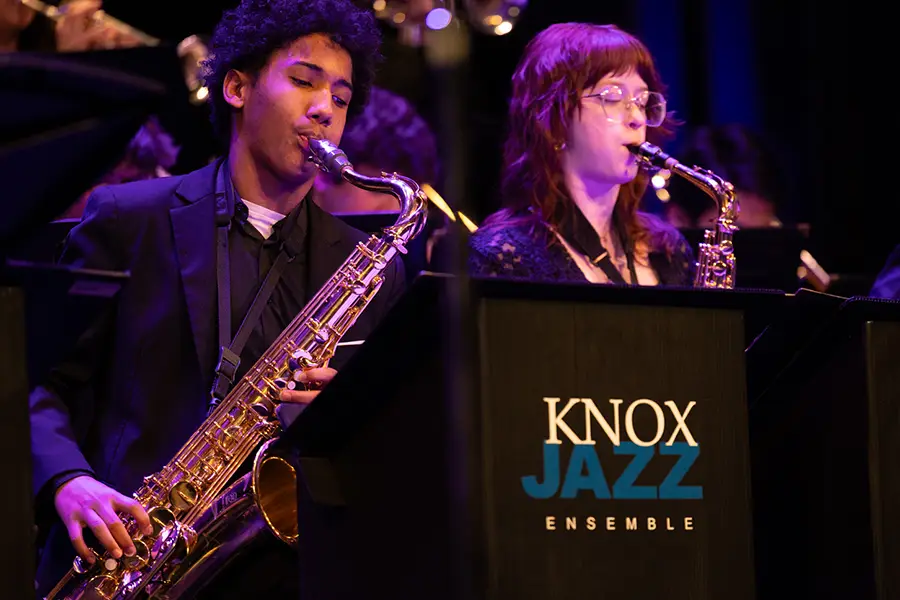
Two students play the saxophone in front of a stand that says Knox Jazz.
Members of the Knox Jazz Ensemble perform at Galesburg’s Orpheum Theatre during the 2026 Mirza Jazz Residency. Photo by Steve Davis P’12
Tamia Ware ’26 and Elizabeth Eckford ’63, D.H.L.’18.

Endowed & Annual Scholarships: Making a Knox Education Possible

Over the course of the Venture Boldly campaign, foundations, both private and public, have provided more than $500,000 in scholarship funds that support current and future Knox students. The generosity of the Hearst Foundation, Charles Becker Foundation, Davee Foundation, and San Francisco Foundation, among others, have provided life-changing experiences that profoundly impact our students. Here are just a few  examples (in our students’ own words):

“This scholarship will help me do what I really want to do at Knox instead of having to worry about what I would have to do to pay off loans. Thank you for giving me the opportunity to further my education while carrying on your legacy.”

—Tamia Ware ’26, Elizabeth Eckford Scholarship Recipient

“I grew up in Bushnell, Illinois, a small town that truly has shaped a lot of what I value in my life, one of those being connections and communications with communities. One of the reasons I came here was because I absolutely adore the idea of being able to know people and be a part of different organizations around campus. . . . Thank you so much for this scholarship that will allow me to continue with my education.”

—Janet Lentini ’27, Robert P. (Bob) Albrecht Endowed Scholarship Recipient

“This scholarship has significantly alleviated the financial burden of my education, allowing me to focus on my studies and pursue my academic and career goals with renewed  determination. Your belief in my potential means the world to me and I am truly honored to be a recipient of this scholarship.

—Grael Mulata ’26, Lily M. Budde and Henry J. Budde Scholarship Recipient

Test: 4

Knox Magazine

Winter 2026

Editor's Note

Editor's Note

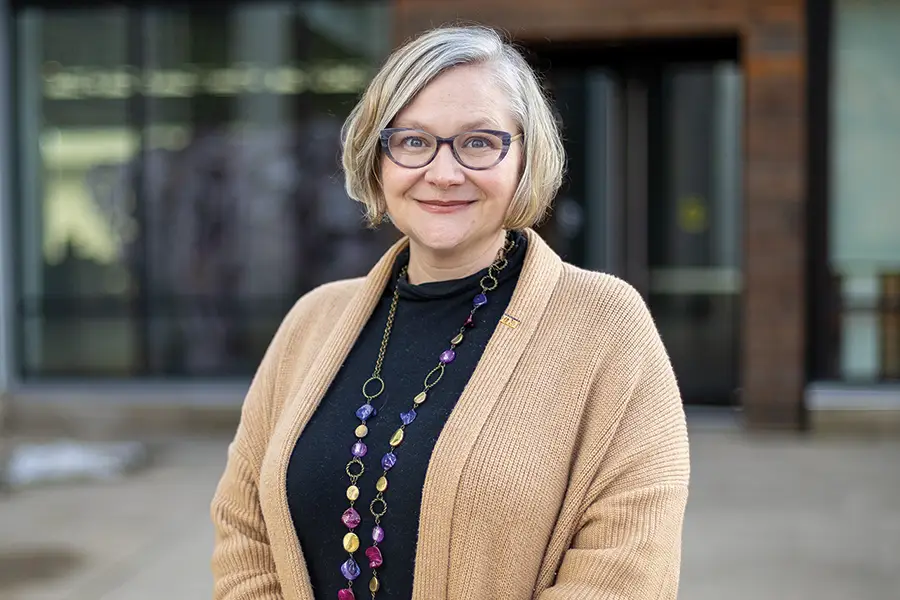
Editor of Knox Magazine Megan Scott ’96

Dear Knox Community,

Knox Magazine has seen its fair share of changes and challenges over the course of its 100-year history. Like Knox College itself, the magazine has adjusted and adapted accordingly—from its original publication as The Alumnus in 1917, to its shift from six issues a year to four and then two, to a name change, the addition of four-color printing, and the launch of its own website in 2017. And this winter, we are introducing a new shift in the life of Knox Magazine—the launch of a new digital-only issue. 

What does this mean for the magazine and its readers? Knox will continue to produce our standard two issues of Knox Magazine. T he summer issue will have both a print and digital edition, while the winter issue will be solely digital. And all community members will have access to the twice-yearly digital issues receiving an email when a new issue of Knox Magazine is available. Most important, our alumni community’s favorite feature, Class Notes, will appear in both the print and digital editions.

While I love receiving Knox Magazine in my mailbox (yes, I recognize I may be biased), I believe that helping Knox bolster its commitment to sustainability, both environmental and financial, by reducing its print run is an important milestone in the magazine’s history. I’m also excited to take better advantage of the magazine’s website, which allows for us to build more robust content. Longer profiles, videos, and links to more in-depth news and features provide even more opportunities for you to stay connected to Knox and its community. For example, you can watch a video of Max Potthoff ’14 and Martin Reichel ’71, our 2025 Alumni Achievement Award recipients, or read more about the alumni who are putting their experience gained in Knox’s Spanish translation and interpretation program to work around the country. To access this content, look for links within the PDF of the winter issue or within stories on the website.

If I’ve learned anything in my years serving as editor of Knox Magazine it’s that our readers—Knox alumni, parents, and friends—will be sure to share their thoughts about this change to the magazine. And that’s exactly what I hope happens. Some of you may miss your second print issue, others may want to ONLY receive digital issues. All thoughts and opinions are welcome and necessary to help us ensure we are producing a communication that is meaningful to our community. Your input also helps guide us in making additional updates or adjustments. Please email us at magazine@knox.edu to share your thoughts. For more than a century, Knox Magazine has been a steady presence in the life of the Knox community, and, regardless of format, this will not change, nor will the time and dedication given to each magazine. Enjoy this winter issue, and please stay in touch.  

Sincerely,

Megan