
-

Apply to Knox
Ready to see yourself at Knox? Applying is the first step. We’ll help you explore academics, campus life, financial aid, and everything else you need to get started.
Get started. -

-
Cyn Kitchen’s Path Returns Her to Poetry
Knox professor, alumna set to publish first full-length collection of poems, Broken Hallelujah, this June.
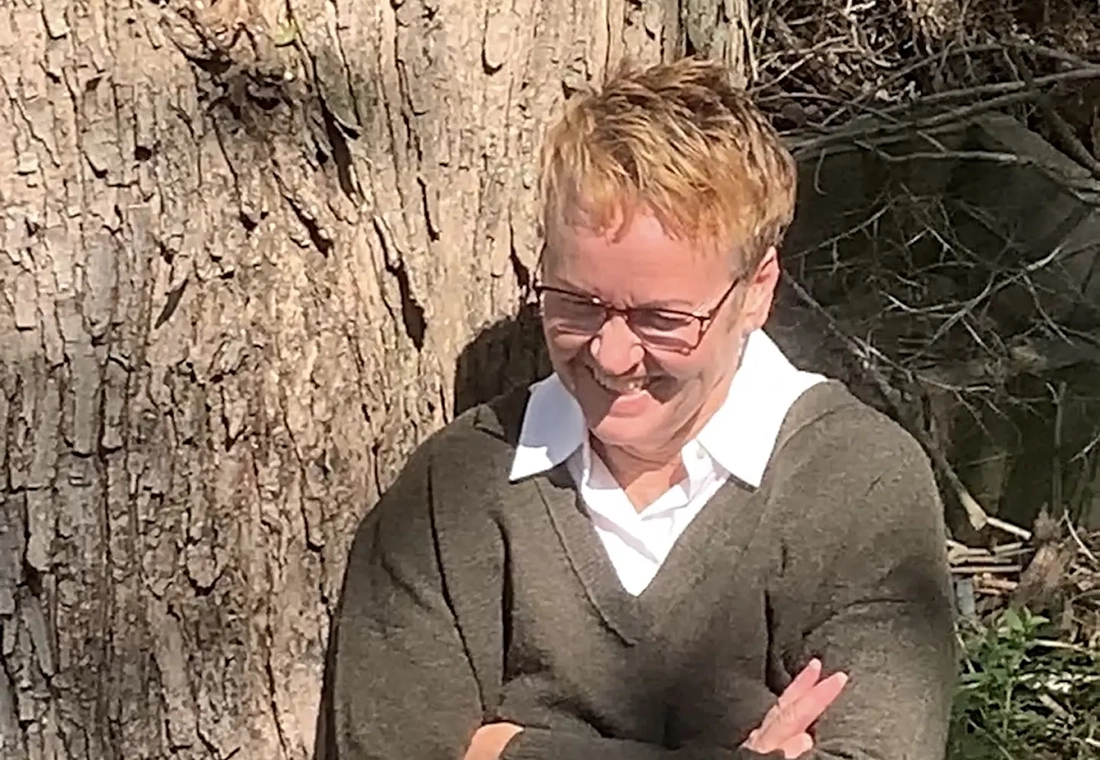
Cyn Kitchen is a professor of English at Knox College, where she’s been teaching creative writing and literature for more than two decades. Kitchen originally came to Knox as a transfer student from Carl Sandburg College, graduating in 2000 with a bachelor’s degree in English. She then worked as a staff member in Knox’s Offices of Public Relations and Advancement before opening her own business and earning her M.F.A. degree from Spalding University. In 2006, she returned to Knox as a member of the faculty, first as a visiting instructor and then as a tenure-track assistant professor. Her first full-length collection of poems, Broken Hallelujah, is set for release in June of 2026.
Pre-orders for the book can be placed by visiting Cyn’s website, cynkitchen.net, or by stopping in Wordsmith Bookshoppe before April 20. Copies will arrive in mid-June.
What is the basis for Broken Hallelujah, and your collection of poems?
It is kind of a coming-out party. It’s my first full-length collection of poems. It came about after falling in love with poetry many, many years ago then kind of minimizing it from my own perspective and thinking. I got my graduate degree in writing, and I focused primarily on fiction and prose in grad school. Then I began teaching at Knox. I’ve always been focused on long-form fiction prose and nonfiction.
What changed for you to go from fiction and prose to poetry?
In 2017, I got an itch to do something creative, and on the first day of the year, I impulsively decided to post a photograph a day on Instagram and see if I could keep it up all year. I ended up having fun with it, and that surprised me. Around November of that year, I sensed my photographic eye had transformed a lot over the course of the previous months. I started to write poems, and as I flexed that muscle, I realized it had not atrophied completely and something unlocked. Over the next several months there was a flood of poems that came primarily from the place where I lived in a rural location. I love being in the environment and being surrounded by nature, so that’s primarily the literal images I came to in writing poems, but those literal images were also what I was living in life at the time—anything from the death of a parent, the birth of a grandchild, to the breakup of a relationship. It could be any kind of thing, but it’s all this back and forth between nature and my life in terms of the seasons I’m going through.
How much do you think being a product of your literal environment impacts your writing and creates a process for all creatives?
For me, it is everything. It means paying attention and giving myself the time and space to quiet my mind, which is a rare luxury these days. Paying attention to the world takes effort and requires plenty of quiet, downtime, and thinking. Living where I do is a true gift for finding material for poems.
What is your process for writing a collection and then realizing you have enough in your collection that you can turn it into something?
That’s a new experience for me. With poetry, there isn’t a natural narrative arc in building a collection. I realized I was circling similar thematic ideas in new ways. In Broken Hallelujah, these ideas centered on seasons of dying and death. My parents were dying as I wrote, and I lost both during that time. Watching their lives close as the seasons changed was compelling, so I kept writing. One day, I realized I’d accumulated quite a bit in a folder on my computer desktop and after spending time with it, I realized I had the makings of a collection. Broken Hallelujah isn’t exactly what I started with in 2018-2019. It’s been a process of revision and letting go of some poems. In the end, what remains is a cohesive collection about noticing beauty and life’s cycles.
When you were doing photography, you mentioned that your eye for photography started to change. Did you notice that change as well when you got back into writing poetry?
That absolutely is part of the process. I think it’s about giving the process time to evolve. At Knox, we focus on the teaching process in the creative writing program. We help students recognize and develop their individual approaches, emphasizing that writing is an ongoing journey. Returning to your work later brings a fresh perspective that can elevate it. Everything I read shapes what I write, becoming part of my worldview. During revision, I often discover moments that reveal lessons I’ve learned. It’s rewarding to now use my writing tools more deliberately than I did as a younger writer.
Has this experience impacted your teaching?
It’s comforting to my confidence to tell my students that I get it. I understand the frustration of the process, I understand the joy of the process, and I get that sometimes you come to a point where you throw your hands up and think you don’t know where to go next. That’s all part of the process, and not surrendering to despair is an act of faith. We have to believe at some point, you have to trust there is something more that you can refine. I love being able to share with my students that I’m not just teaching them something from a textbook, but part of a life I’m living too. I can share with them what the struggle of choosing to be a writer looks like in practice, and give them a sense of possibility.
How do you start writing? With poetry, I assume it’s not a plan, something just flips a switch, and you go?
There will just be a moment. One spring, on a day we finally opened the windows for the breeze, I was walking on my wood floors about a mile from a train crossing. I felt a low rumble through my feet and realized a coal train was on the tracks. It wasn’t close enough to blow its whistle, but I could still feel it. I’ve lived here long enough that my body now senses when a train is coming. That realization struck me, so I wrote a poem about feeling a train through my feet. It’s simple moments like these that feel out of the ordinary, or that I notice in a new way.
What is next for you?
I have two more full-length collections that I am shopping now, and I hope that within the next year or so, those will be in the works. I’ve also drafted and revised, and am now seeking representation for a memoir I’ve written. I’m hoping maybe at some point there may be a book of creative nonfiction that I can put out in the world as well. Meanwhile, I have some personal goals I am working towards. I have a Substack, and I’m toying with starting a podcast, I’m working on recording my short story collection as an audiobook, and I’m teaching at a writing conference this summer. On top of that, I get to be a grandma, which is fun too.
Where do you find the time to do all this, while also teaching?
It’s like everyone else who I have ever heard who prioritizes writing or whatever you do in your life that makes your soul feel alive: Writing is a priority; I do it every day, I make the time for it, and I have a lifestyle that allows for it. I’m able to get my work done, and the quiet life I live isn’t a struggle. I haven’t always had the ability, but now that I do have the time, life allows me the freedom and the room to write as much as I want, and that’s pretty nice.
For an example of Kitchen’s poetry, here is her holiday poem: A Galaxy of Silence
Published on March 30, 2026
- Scott Holland, Knox College Office of Communications