
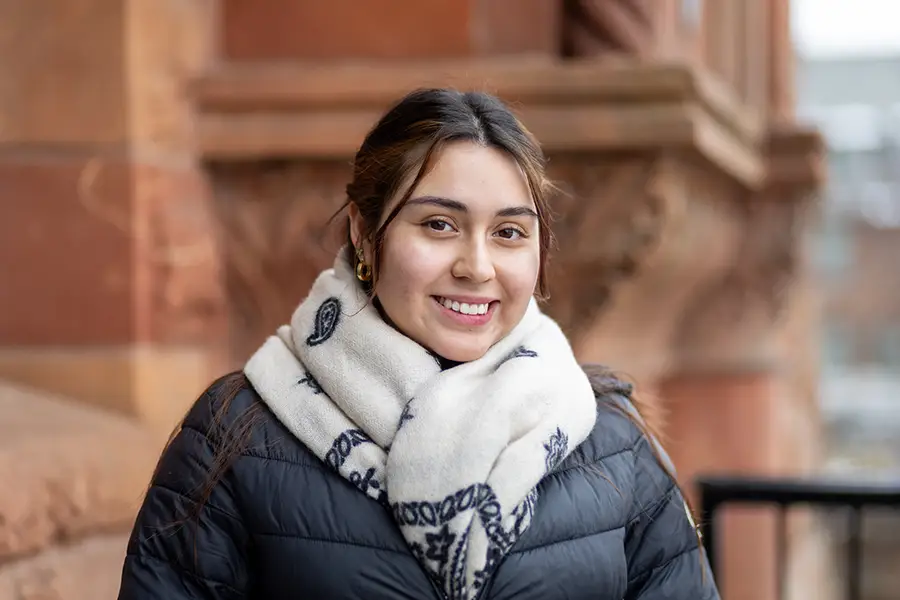
Paula Flores Cevallos ’26 is a biology major and Spanish translation and interpretation and German double minor. After graduation, she plans to take a gap year and, ultimately, hopes to attend medical school in Spain.
Three Facts
For her graduation capstone project, Paula completed an internship at a clinic in Chicago, translating official documents in Spanish.
Her family is from Ecuador, giving her what she calls an Ecuadoran accent. “If a patient says they are from Nicaragua and uses specific slang, I’ll have to use context clues or intervene and ask what they exactly mean.”
Flores recently completed the medical interpretation written and oral exam and is now officially certified as a medical interpreter by the National Board of Certification for Medical Interpreters with an official title of: CMI-Spanish (Certified Medical Interpreter).
What do you plan to do during your gap year?
I’m going to work as an EMT. It’s pretty common for students who want to work in the medical field; it helps to see if you’re made for the pressure of working with patients. You never know what condition a patient is in, so this will help you determine whether you can do it.
How can interpreters help Spanish-speaking patients and English-speaking doctors?
There’s a power dynamic between the patient and the doctor, and we’re here to help the doctor be more compassionate in their diagnosis and to take factors like religion or heritage into account. Interpreters help make patients feel safe by sharing how they feel and then letting the doctor listen and develop a treatment plan.