
“
“There are few professions that can impact individuals, communities, and the world like teaching at the collegiate level. Tenure is granted to a faculty member, not only in recognition for what they’ve already accomplished, but, and perhaps more importantly, for the promise we see in them.”
–Provost & Dean of the Faculty Melissa Glenn
If there is a generational-throughline that connects Knox alumni, it is the faculty. It’s not unusual for a faculty member to receive their terminal degree, join the College faculty in their 30s and retire 30 or more years later. Their teaching provides generations of students with support and mentorship that lasts a lifetime, and their scholarship provides the foundation of the College’s academic experience. They are truly the soul of the College.
The Knox faculty body is made up of many levels of impactful scholar-teachers, from instructors to adjunct or visiting professors, to those on the tenure track, starting with assistant and moving to associate and, ultimately, full professor. The primary difference between instructors, visiting faculty, and tenure-track faculty is the promise of longevity at the institution. According to faculty regulations, “The rank of professor must be earned. . . . The record must show not only a strong performance as a teacher but also, and especially, the quality and quantity of scholarship and creative work to be expected of a full professor and senior member of the College faculty.”
This past year, Knox experienced a full cycle of tenure milestones—seven new tenure-track faculty were hired, four faculty received tenure, one faculty member was promoted to full professor, and six faculty received endowed professorships. Each of these faculty members contribute to the soul of the institution, bringing their scholarship and commitment to teaching to generations of Knox students.
New Tenure-Track Faculty
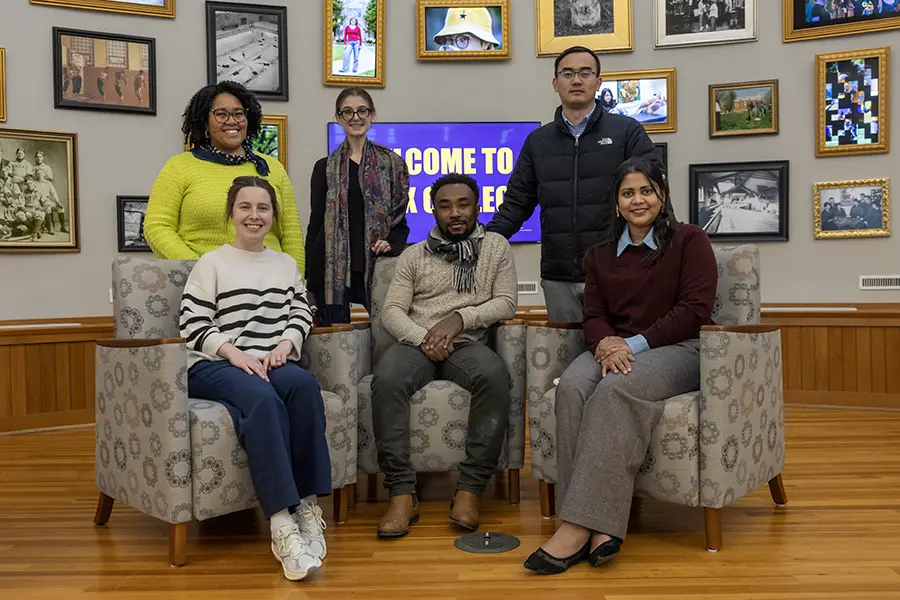
Knox welcomed seven new tenure-track faculty to its academic program in August 2025. The new faculty span the arts and sciences, including art, chemistry, computer science, environmental studies, and psychology.
Eugene Ofori Agyei
Assistant Professor of Art
B.A. in Industrial Art, Kwame Nkrumah University of Science & Technology, Ghana
M.F.A. in Ceramics, University of Florida
"I chose to join Knox because it was the right time to share my work more widely. Since arriving, I have been continually impressed by the faculty, students, and overall engagement throughout the campus community."
Hannah Bradshaw
Assistant Professor of Psychology
A.A, Carl Sandburg College.
B.S. & M.S., Western Illinois University
M.S & Ph.D in Experimental Psychology, Texas Christian University.
"Growing up nearby in Abingdon, I always aspired to attend Knox. Now, I am grateful for the opportunity to be here and particularly enjoy seeing the impressive whale skeleton each day."
Shengting Cao
Assistant Professor of Computer Science
B.S. in Computer Science & Ph.D. in Electrical & Computer Engineering, University of Alabama.
“I’m looking forward to teaching passionate students about programming.”
Amy Jones-Haug
Assistant Professor of Anthropology & Sociology
B.Sc. in Sociology & Cognitive Neuroscience, Yale University
M.Sc. & Ph.D. in Sociology, University of Wisconsin-Madison
“The students here are incredible. They’re really inquisitive, you can tell they think how things connect together and that’s what makes teaching fun for me.”
Jurdana Masuma Iqrah
Assistant Professor of Computer Science
B.S. in Computer Science, University of Dhaka
Ph.D. in Computer Science, University of Texas at San Antonio
“Knox is a great place; it is a welcoming community here. I’m excited to teach the students and have research opportunities with them.”
Kaleigh Karageorge
Assistant Professor of Environmental Sciences
B.A. in Corporate Communication, M.A. in Political Science & Ph.D. in Public Policy, Purdue University
"I appreciate Knox's focus on teaching and its commitment to campus culture and engagement. Working closely with students on research and contributing to the local area are important to me."
Lumala Nelum Perera
Assistant Professor of Chemistry
B.S. in Chemistry, University of Ruhuna, Sri Lanka
Ph.D. in Chemistry, New Mexico Tech
“I’m very excited to be here and looking forward to teaching students. They’re really inquisitive, you can tell they think about how things connect together, and that’s what makes teaching fun for me.”
Faculty Promotions
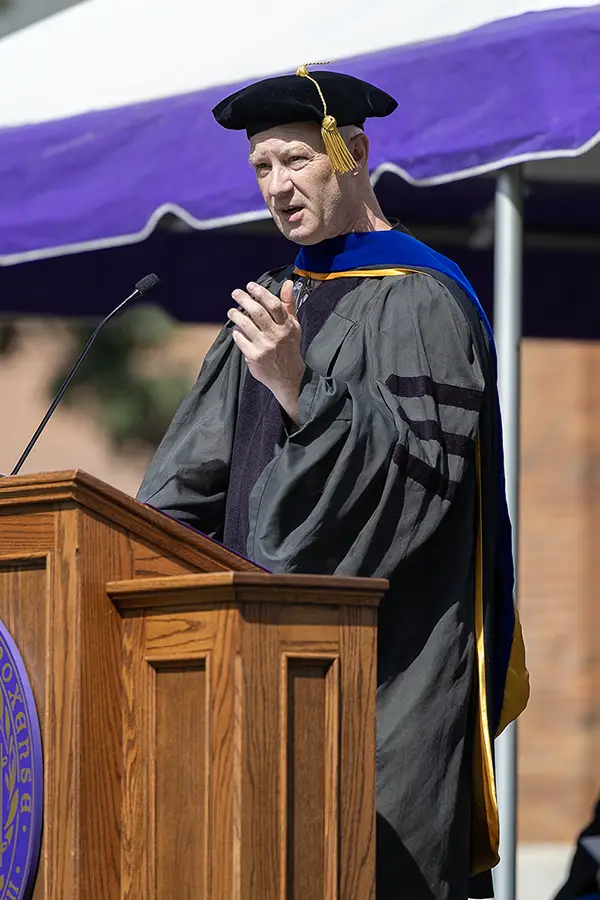
Four faculty members received tenure and promotion to associate professor in May 2025: Thomas Bell (political science), Roya Biggie (English), Deirdre Dougherty (educational studies), and Leanne Trapedo Sims (peace and justice studies). Read more about their promotion on the Knox website. In addition, Mark Shroyer was promoted to full professor in physics by the Knox College Board of Trustees this past September, effective at the start of the 2025-26 academic year.
A faculty member since 2005, Shroyer earned his bachelor of science degree from Truman State University in 1993. He went on to obtain both his master's degree and Ph.D. in physics from Oregon State in 1995 and 1999, respectively. His teaching interests are broad, spanning introductory physics, modern physics, classical dynamics, electrodynamics, statistical mechanics, and the physics of sports and music.
“
“You will become part of this campus, and Knox will become part of you.”
—Professor of Physics Mark Shroyer to students at Opening Convocation, Fall 2025
While at Knox, Shroyer has secured multiple grants, including the National Science Foundation Major Research Instrumentation Grant, the Knox Faculty Research/Creative Work Grant, and two Ellen Browning Scripps Foundation Grants, one which helped secure the Observatory Dome and another to upgrade the Mössbauer Spectrometer. His contributions to physics extend beyond grant work. Shroyer has authored multiple publications and delivered national and international presentations throughout his career. STEM outreach in the community is one of his top priorities, and he has participated in Science Nights at local elementary schools, taught College for Kids for many years, and has been part of MathCounts, an engaging math program for middle school students, for over 15 years.
When asked what the title “professor” means to him, Shroyer noted, “Early in my career at Knox there were a number of senior colleagues that I would view and say internally 'That's a professor.' Chuck (Charles) Schulz ’72 [physics], Lance Factor [philosophy], Liz Carlin Metz [theatre], to name a few. While I now share the title, I don't yet feel like I'm in that group. But that's the legacy I want to live up to.”
Endowed Professorships
Endowed professorships serve as a way to honor and reward faculty members for their accomplishments and years of service. Appointments are the highest honor Knox College can bestow on a faculty member and continue the College’s commitment to excellence in teaching and research. Knox College now boasts 22 endowed professorships and chairs, including the six who received professorships in 2025.
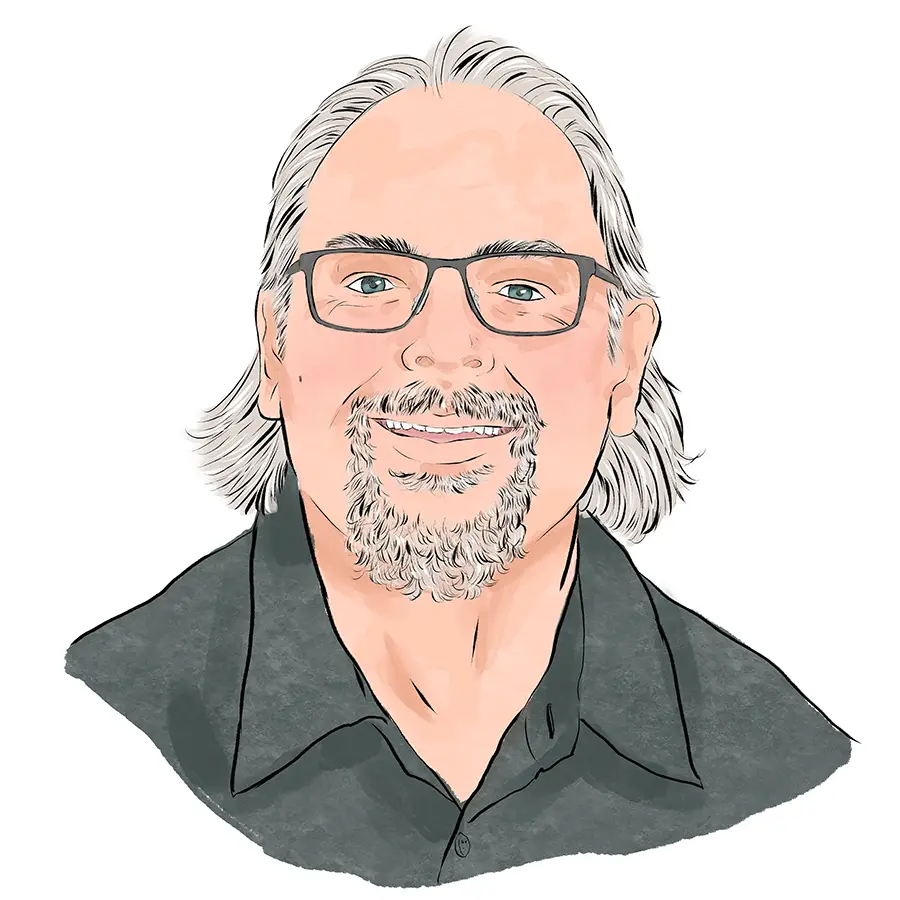
Craig Choma ’93
Chancie Ferris Booth Distinguished Service Professor in Theatre
Chancie Ferris Booth Distinguished Service Professor in Theatre
Choma joined Knox’s faculty in 1996 after earning a B.A. in theatre and philosophy from Knox in 1993 and two MFAs, one in scenic and one lighting design, from Carnegie Mellon in 1996. His teaching interests include design and technology for stage and screen, scenic design, lighting design, and scenic art. In addition to designing productions at Knox College, Choma also has worked in New Orleans, Madison, Milwaukee, Chicago, and internationally in France on multiple occasions. Among his professional accomplishments, Choma has presented at national conferences, including "Dance & Design: Fostering Collaboration through Curriculum" at the National Dance Education Organization Conference and "Collage, Metaphor & Fusion: Collaborating Across the Disciplines" at the International Conference on the Arts & Humanities.
What is the professional accomplishment of which you are most proud?
I was one of the principal designers for the Vitalist Theatre Company in Chicago, working with them on numerous productions for over a decade. The artistic director was my colleague, Liz Carlin Metz. The professional work I did with that company was some of my best. The biggest highlight was an award winning production of Mother Courage and Her Children for which I was the scenic designer.
What do you hope your students take away from one of your courses?
My biggest hope is that students will learn to look at and engage with the world in new ways, having hopefully become more observant about how design literally surrounds us. From architecture, landscape design and urban development to graphic design, product design, industrial design and entertainment design, we live in a carefully curated world, a myriad of design choices surrounding us at every turn. Becoming aware of how (and why) the world is designed helps to focus the young designer's mind on how to use visual design elements to enhance theatrical storytelling at the highest level.
What do you believe is most valuable about a Knox education?
Students at Knox learn how to think, not what to think. Students learn how to be critical, asking questions and digging deeper. They are encouraged to formulate their own opinions and be able to talk about and defend those opinions. Knox students also learn the value of their own independence and their own voice, while also recognizing the value of being a contributing member to maintaining a healthy campus community. All of these things help graduates become exemplary citizens and lifelong scholars.
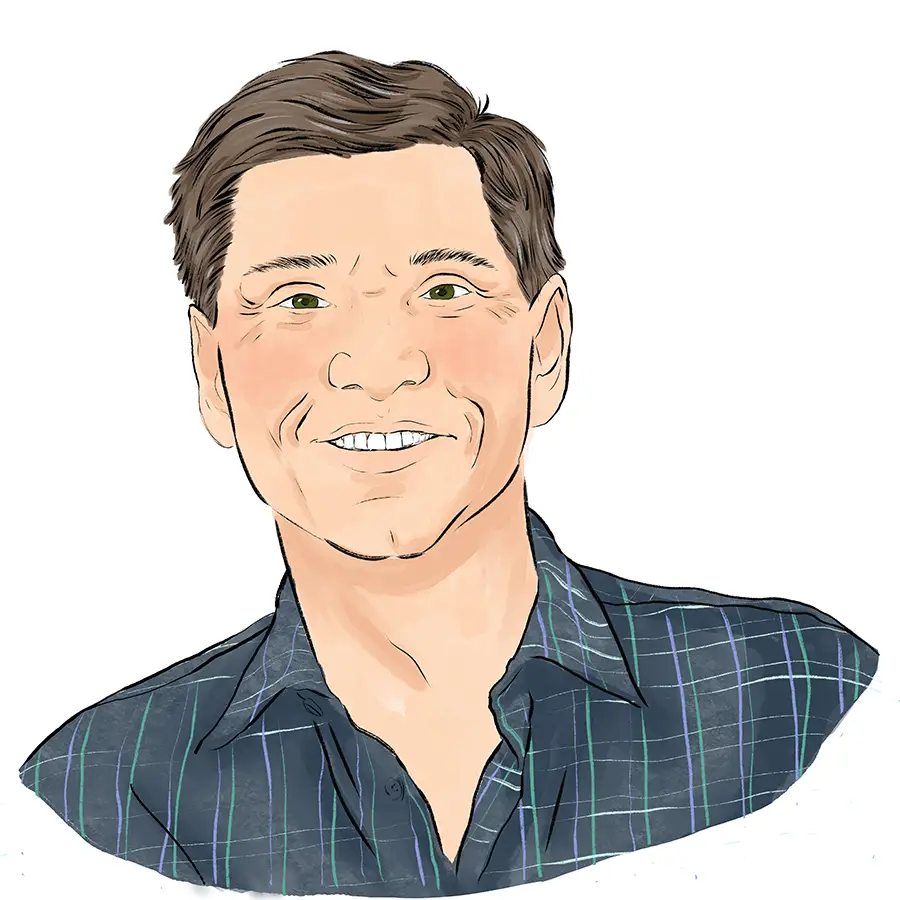
Gregory Gilbert
George Appleton Lawrence Distinguished Service Professor in Art History
Gilbert joined the faculty in 1995 after earning a B.F.A. in art history from the University of Kansas in 1981, a museum studies certificate in 1983, and an M.A. and Ph.D. in art history from Rutgers University in 1984 and 1998, respectively. His teaching interests include curatorial studies; contemporary American and European art; 19th-century art and architecture; American art, architecture, and culture; Native arts of the Americas; the interpretation of works of art, visual culture theory; Andy Warhol and the visual culture of the 1960s, and collage. His current research explores the relationship between Abstract Expressionist art and the mass visual culture of World War II, as well as the connections between Pragmatist philosophy, American poetry, and the early Abstract Expressionist art of Robert Motherwell. He has worked as a museum curator for such museums as the Figge Art Museum and the Zimmerli Art Museum and currently serves as the vice president on the board of directors of the College Art Association. Gilbert's scholarship has been published in books by MIT Press, Rutgers University Press and Routledge Press as well as in such periodicals as the Oxford Art Journal, CAA Art Journal, Arts and The Brooklyn Rail. He has also authored numerous exhibition catalogs, and his exhibits have been reviewed in The New York Times. Gilbert also directs the art museum studies minor program, which includes courses in museum issues and practices and trains students in the curating of exhibitions.
What is the professional accomplishment of which you are most proud?
I am the first tenure-track art historian hired at Knox and have directed and taught the art history program single-handed for most of my 30 years at the college. I am especially proud that over 200 students have graduated with an art history major or minor. Many of these alumni went on to graduate art history programs and now hold major art museum and teaching positions. In terms of my broader career, it has also been gratifying to have remained active with my scholarship and curating.
What do you hope your students take away from one of your courses?
In both my introductory and advanced courses, one of my main aims is for students to fully grasp the rich and complex interdisciplinary basis of art history. I want them to understand and appreciate how fully art and visual culture intersects with all areas of society.
What do you believe is most valuable about a Knox education?
Despite profound shifts in higher education, I think what is most valuable is our ongoing commitment to the liberal arts ethos, our dedication to training students to think and work in critical, creative ways. However, Knox has also adapted this traditional ethos to new academic trends for more socially conscious and pre-professional forms of education. This kind of curricular innovation includes the art museum studies minor, which I developed to bridge academic art history with a more applied career pathway for students.
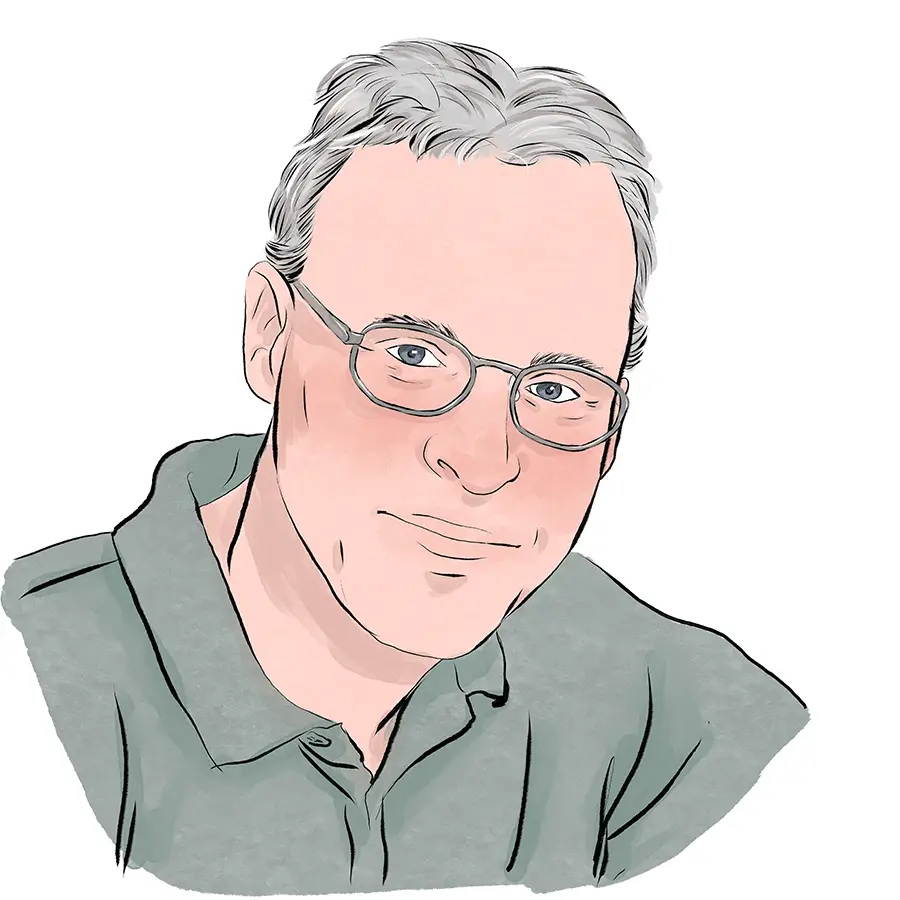
Thomas R. Moses,
Cornelia H. Dudley Professor in Physics
Moses joined the faculty at Knox College in 1992. He received his B.S. in physics and mathematics from Stanford, graduating Phi Beta Kappa in 1987. He earned his M.A. in physics from the University of California, Berkeley, in 1990, and his Ph.D. in physics from the same institution in 1993. His teaching interests include physics, analytical mechanics, electricity and magnetism, quantum mechanics, thermodynamics, and statistical mechanics. He is the recipient of a National Science Foundation-Solid State Chemistry grant, Surface Ordering and Anchoring Energy in Nematic Liquid Crystals, and has authored or co-authored several publications appearing in the American Journal of Physics and Physics Teacher, among others.
What is the professional accomplishment of which you are most proud?
I’d say it was coming here fresh out of grad school and building a working research experiment from scratch. That was really challenging. Hundreds of parts to order, new instruments to learn, custom electronics to design and build, computer control code to write, and parts to fabricate in the machine shop (had to acquire one of the key machine tools as well), grants to write, and many late nights. What a relief when it actually worked!
What do you hope your students take away from one of your courses?
Thinking about the introductory sequence course Heat, Waves, and Light that I’m teaching in the Winter Term, there are many take-aways. I hope students acquire or deepen their appreciation of how physical theory can explain and provide insight into their world, from daily phenomena like how their car engine works, or how much energy is in a brownie to more global issues like planetary warming. I hope students develop their mathematical reasoning skills and take away the ability to make quantitative estimates, as well as the complementary ability to be able to critically evaluate the quantitative or logical claims made by others. And, naturally, I hope students find that doing physics can be great fun and maybe even the best possible job.
What do you believe is most valuable about a Knox education?
I’d say access—access to faculty members and highly trained and committed staff members. My own background was at large research institutions, and while there are of course advantages and disadvantages for any kind of institution, I never had anywhere near the access to trained and committed experts that I see Knox students benefiting from. Being able to work side by side with professors on their research projects or learn to set up, operate, and create on the wide variety of tools in our new Makerspace under the guidance of our science technician—these really valuable experiences are happening every day at Knox.
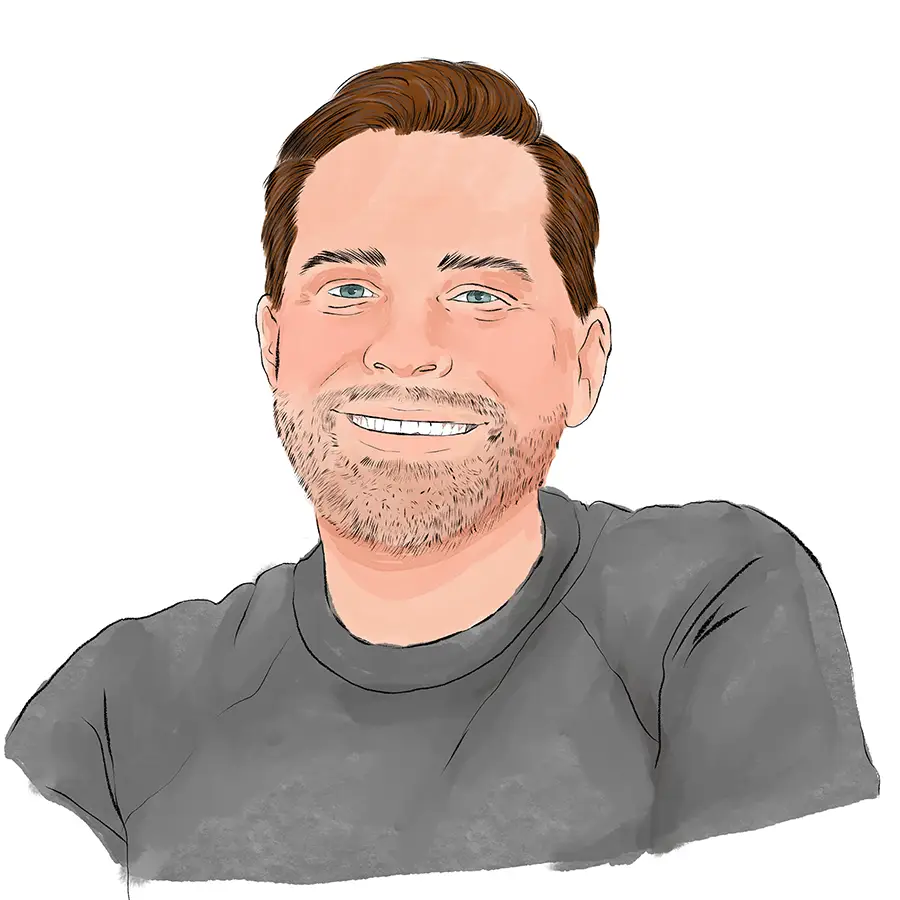
Brandon E. Polite ’03
R. Lance Factor Endowed Professor of Philosophy
Polite joined the faculty at Knox College in 2007. He earned his B.A. in philosophy from Knox College in 2003.He earned his M.A. and Ph.D. in philosophy from the University of Illinois in 2005 and 2010, respectively. His teaching interests include aesthetics, philosophy of art, philosophy of music, Greek philosophy, and symbolic logic. Polite’s research has been widely published in academic journals, and he is the editor of Taylor Swift and the Philosophy of Re-recording: The Art of Taylor's Versions. He is also the host of the YouTube series, Polite Conversations: Philosophers Discussing Art, where he talks to other philosophers about their work in aesthetics and the philosophy of art, diving into their views in a fun and engaging way. He recently completed a three-year term as Trustee of the American Society for Aesthetics.
What is the professional accomplishment of which you are most proud?
My edited volume, Taylor Swift and the Philosophy of Re-recording: The Art of Taylor’s Versions. Bringing together a crack team of scholars to think through the philosophical implications of Swift’s re-recording project, and working with them to develop their ideas and eventually bring them into the world, was incredibly rewarding. It ended up being the most-read book in Bloomsbury’s Philosophy Library in 2025, indicating that all our hard work paid off!
What do you hope your students take away from one of your courses?
I hope students leave my courses with an appreciation for the value of playing with ideas—of treating concepts and arguments as things to be explored, tested, and reshaped rather than merely memorized or dismissed. More than mastering particular theories or texts, I want them to develop intellectual curiosity, interpretive charity, and the confidence to take their own judgments seriously while remaining open to alternative positions that could positively enhance or even upend their own. Ideally, I hope they come away seeing philosophy not as a set of abstract puzzles, but as a living practice that helps them make better sense of the world and their place within it.
What do you believe is most valuable about a Knox education?
What I find most valuable about a Knox education is that we give students the space to explore ideas openly, ask questions freely, and learn how to listen and respond thoughtfully, even when disagreeing. This encourages them to reflect on their own assumptions, appreciate multiple perspectives, and approach new ideas with humility and care, which are incredibly important skills to have in today’s world.
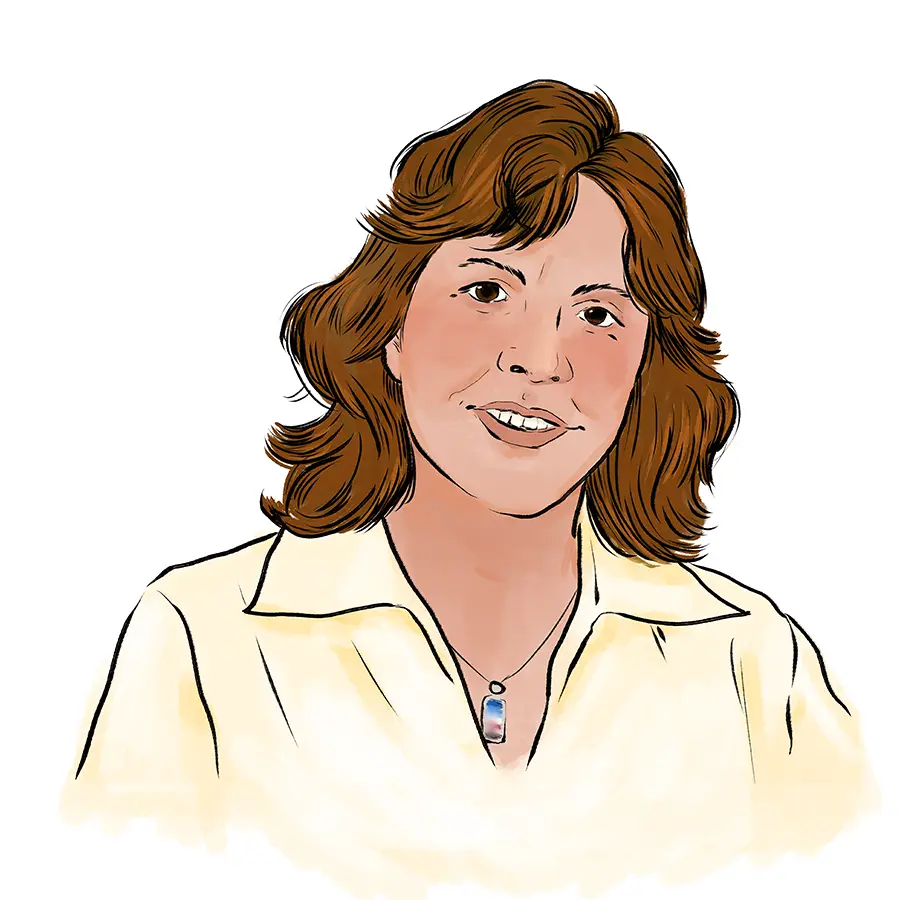
Robin Ragan
Szold Distinguished Service Professor in Modern Languages
Ragan joined the faculty at Knox College in 2000. She earned her B.A. from the University of Illinois in 1993. She earned her M.A. from the University of Illinois in 1995 and her Ph.D. from the University of Illinois in 2001 in Spanish. Her teaching interests are Spanish translation and interpreting, Spanish literature (19th and 20th centuries), representations of women, medical issues in literature, Spanish youth movements, and digital storytelling. Most recently, she has spearheaded the College's efforts to introduce Spanish translation and interpretation into the curriculum, working with students on numerous projects in the United States, including Galesburg and the southern border, and Mexico. She has received over a dozen honors and grants during her time at Knox College, including the Phillip Green Wright Award for Excellence in Teaching in 2024 and 2006. She also served as director of the Eleanor Stellyes Center for Global Studies for five years and has taken students abroad nine times to countries including Argentina, Spain, and Mexico.
What is the professional accomplishment of which you are most proud?
I would say getting the translation and interpreting program off the ground at Knox. That was something that was years in the making, and I think brought something very unique to Knox and certainly enriched my life in many ways. It was because of this program that I honed my own translation and interpreting skills, got deeply involved in asylum work, and resparked my love of language.
What do you hope your students take away from one of your courses?
I hope they reflect on the power and magic of words. One of the songs I like to play in class has a line that hopes for a future in which “the dictionary stops bullets.” When you learn a language, you become hyper aware of word choice and connections between words, like the subtle, but powerful difference between house and home.
What do you believe is most valuable about a Knox education?
I would have to say having the chance to study under an incredibly dedicated faculty who are always coming up with innovative ideas.
Michael A. Schneider
Burkhardt Distinguished Chair in History
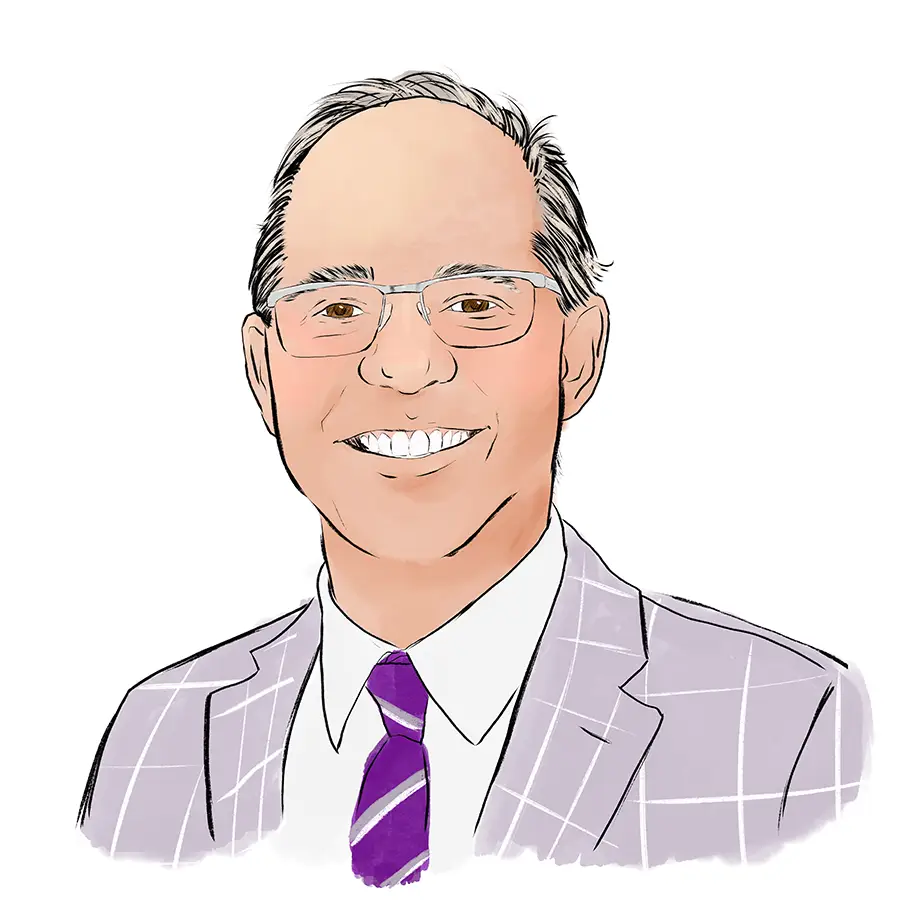
Schneider joined Knox College’s faculty in 1992 after earning his B.S. in chemistry from Michigan State University in 1984, M.A. in Far East history from the University of Chicago in 1985, and Ph.D. in modern Japanese and international history from the University of Chicago in 1996. His teaching interests include East Asian civilization, modern China, modern Japan, social life of food, culture, and diplomacy in modern East Asia, approaches to international history, and nationalisms. Schneider has been featured in several publications and delivered countless presentations during his time at Knox College. He has also earned several honors and grants for his work while at Knox. Schneider also held many administrative positions at Knox College, serving as associate dean for four years, as director of the Eleanor Stellyes Center for Global Studies for eight years, interim dean of the College from 2017-18, and as provost and dean of the College from 2019-2025.
What is the professional accomplishment of which you are most proud?
I would be hard pressed to place any individual accomplishments ahead of the $1.2 million Mellon Foundation "Abolition for All Time" Grant. A grant project of this scale is, by definition, a collective achievement. As lead author of the proposal and its shepherd through the stages of the foundation's review, I know how critical the many contributions of ideas and suggestions were to the proposal's success. Indeed, the organic unity of the ideas within it and our proposals' clear response to faculty development and institutional needs of the moment were plainly evident to the foundation. Coming out of the pandemic, we have been able to foster collaborations across campus and advance student digital projects in ways we could only dream of before it.
What do you hope your students take away from one of your courses?
My fervent wish is that students leave my courses with the belief that the course material is truly for them. In East Asian studies, we can be exploring fairly esoteric stuff that may feel distant and alien, from a time and place students may not recognize as immediately relevant to their lives. When we get to the moments when students want to engage in debates over archeological evidence from 3000 years ago or connect with characters in a 1000-year old novel or care about battles for freedom and democracy 100 years ago, I figure we are doing something right.
What do you believe is most valuable about a Knox education?
I would start with "ownership" to which I would immediately add "experience." A transformative education occurs when students begin charting their own educational paths while having access to experiential learning opportunities to extend and expand those choices. The alchemy of owning one's education combined with unanticipated experiences generates outcomes that can be unexpected and wonderful. I am not certain that my own education was designed to produce such outcomes, but I hope I can contribute something to an education like that today.